 Save to Pinterest
 My neighbor handed me a takeout container of soba noodles on a sweltering afternoon, insisting I couldn't survive another summer without learning to make this myself. She was right—there's something almost meditative about assembling these bowls, the way the cool sesame dressing clings to each strand of buckwheat noodle. It became my answer to every "what's for dinner?" question when the kitchen felt too hot to think. The beauty is in its simplicity: no fancy techniques, just fresh ingredients and a dressing that tastes like it took hours but honestly takes five minutes.
I made this for my book club last month when someone brought a friend who'd just gone vegetarian, and I watched her expression shift from polite to genuinely delighted with each bite. One woman asked for the recipe three times before I realized she was actually serious about making it. That's when I knew this bowl had moved beyond my kitchen into something worth sharing.
Ingredients
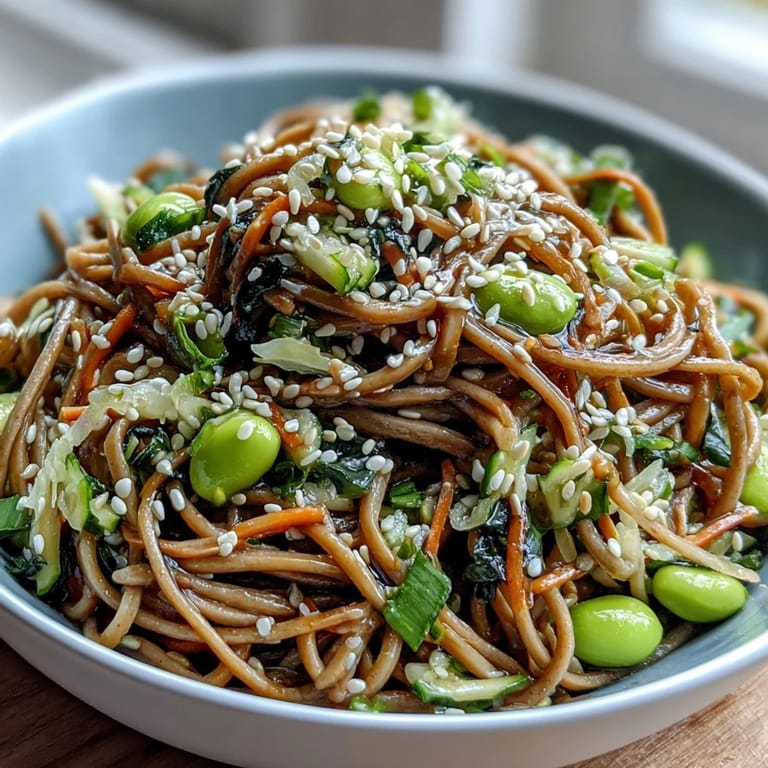
- Dried soba noodles (250 g): These buckwheat noodles have an earthy, slightly nutty flavor that anchors the whole bowl—look for ones that are 100% buckwheat if you're avoiding gluten, though most contain some wheat.
- Shelled edamame (1 cup): Whether fresh or frozen, these little green pods add protein and a satisfying pop of texture that keeps the bowl from feeling like just vegetables.
- Cucumber, julienned (1 medium): The coolness of cucumber is essential here; it's your refreshment factor on hot days.
- Carrots, peeled and julienned (2 medium): Raw carrots add a subtle sweetness and crunch that contrasts beautifully with the soft noodles.
- Scallions, thinly sliced (2): These bring a gentle onion bite that wakes up your palate between bites.
- Toasted sesame seeds (2 tbsp): Toast them yourself if you have time—the difference between jarred and fresh-toasted is worth those two extra minutes.
- Fresh cilantro or mint (1/4 cup, optional): Either one lifts the entire bowl, though I skip this if I'm doubling the recipe and running short on time.
- Soy sauce (3 tbsp): The umami backbone of the dressing; tamari works if you need gluten-free.
- Rice vinegar (2 tbsp): This keeps everything bright and prevents the dressing from tasting heavy.
- Toasted sesame oil (1 tbsp): A little goes a long way—use the good stuff, as it's the secret note people taste without knowing what it is.
- Tahini or smooth peanut butter (1 tbsp): This creates silkiness in the dressing without any cream; tahini feels more authentic to the Japanese version.
- Honey or maple syrup (1 tbsp): Just enough sweetness to balance the salty and tangy elements.
- Fresh ginger, grated (1 tsp): Don't skip this—it adds warmth and helps with digestion after a big meal.
- Garlic clove, minced (1 small): One clove is perfect; two will overpower everything.
- Water (1 tbsp, as needed): Keep this on hand to loosen the dressing to the right consistency.
Tired of Takeout? 🥡
Get 10 meals you can make faster than delivery arrives. Seriously.
One email. No spam. Unsubscribe anytime.
Instructions
- Bring your water to a rolling boil:
- Use a medium saucepan filled generously with salted water—you want it to taste like the sea. This is where the noodles' flavor begins.
- Cook the soba noodles until just tender:
- Follow your package timing, but start checking a minute early because overcooked soba turns to mush. The moment they're done, drain them in a colander and run cold water over them, stirring gently with your fingers to prevent clumping.
- Blanch the edamame while your noodles cook:
- Drop them into boiling water for just 2 to 3 minutes—they should stay bright green and firm. Drain and set aside; they'll be warm, which actually complements the cool noodles nicely.
- Whisk together your dressing in a small bowl:
- Start with the soy sauce, rice vinegar, sesame oil, and tahini, whisking until smooth, then add the honey, ginger, and garlic. Taste it straight from the whisk—it should make you pause and smile. If it's too thick, add water a little at a time until it coats the back of a spoon but still flows.
- Prepare all your vegetables while everything cools:
- Julienne the cucumber and carrots into thin matchsticks, slice the scallions on an angle, and if you're using herbs, roughly chop them. Having everything prepped makes assembly feel like play rather than work.
- Toss the cooled noodles with half the dressing:
- Use a large bowl and be gentle so you don't break the delicate strands. The noodles should glisten but not be drenched.
- Divide the noodles among four bowls and build your toppings:
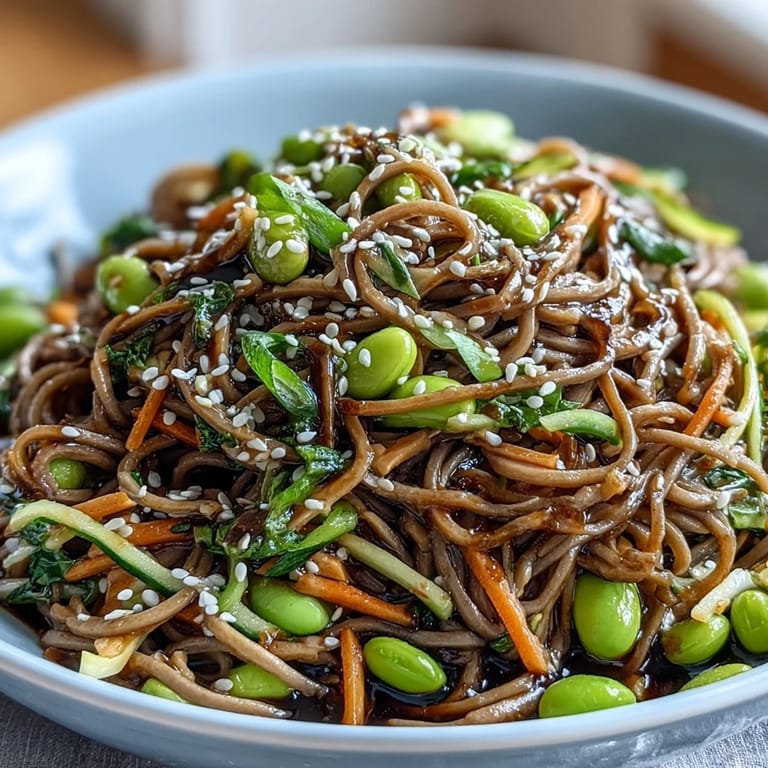
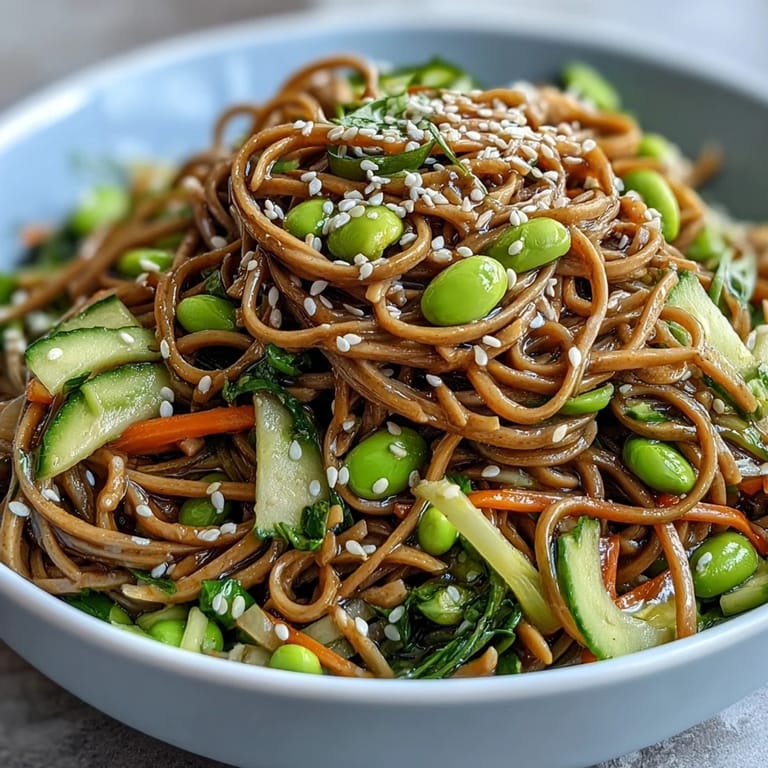
- Layer the edamame, cucumber, carrots, and scallions on top in whatever way looks appealing—it's as much about presentation as taste. Drizzle the remaining dressing over each bowl and scatter sesame seeds and herbs on top.
- Serve immediately and enjoy the contrast:
- Cold noodles, room-temperature vegetables, a dressing that tastes a little warm from the ginger, all coming together in one bite.
 Save to Pinterest
 My daughter, who normally eats like a bird, asked for seconds of this bowl unprompted—no cajoling, no negotiations. I realized then that feeding people well sometimes means getting out of your own way and letting simple, honest food do its job.
The Magic of Sesame
Sesame is doing all the heavy lifting in this recipe, and once you understand why, you'll start using it everywhere. The oil brings richness, the seeds add texture, and together they create this nutty, deeply satisfying note that makes your brain register this as a complete meal. I learned this by accident when a friend's dad, who grew up in Tokyo, tasted mine and nodded approvingly at the sesame-to-noodle ratio.
Building Flavor Without Heat
There's no cooking required beyond boiling noodles and blanching edamame, which means every flavor is clean and distinct. The ginger and garlic in the dressing give you warmth without actual heat, the vinegar adds brightness, and the soy sauce anchors everything with umami. This is how Japanese cooking taught me that bold flavor doesn't always require a stove.
Make-Ahead Magic and Summer Survival
This bowl is one of the few dishes that actually tastes better after a night in the fridge—the noodles absorb more dressing, and flavors deepen. I'll often make four servings on Sunday and eat three different variations throughout the week by swapping toppings. On lazy evenings when I don't want to cook, this comes together in the time it takes to boil water.
- Prepare everything except the noodles the night before and store in separate containers for fastest assembly.
- The dressing keeps for five days in an airtight jar, so make extra and use it on grain bowls, roasted vegetables, or even grilled fish.
- If your noodles stick together in the fridge, pour a little cold water over them and toss gently before serving.
 Save to Pinterest
 This bowl has become my default answer when someone asks what I'm making for dinner, and I've never regretted it. It's the kind of food that feels like a gift to yourself—nourishing, quick, and genuinely delicious every single time.
Recipe FAQs
- → What makes soba noodles unique?
Soba noodles are made from buckwheat flour, giving them a nutty flavor and firm, chewy texture. They're traditionally served cold or hot in Japanese cuisine and cook quickly, making them perfect for light, refreshing bowls like this one.
- → Can I make this gluten-free?
Yes. Look for 100% buckwheat soba noodles and substitute tamari for the soy sauce. Most other ingredients, including the vegetables, edamame, and sesame dressing components, are naturally gluten-free.
- → How should I store leftovers?
Store components separately in airtight containers in the refrigerator for up to 3 days. Keep the dressing in a small jar and toss everything together just before serving to maintain the noodles' texture and vegetables' crispness.
- → What vegetables work best in this bowl?
Cucumber and carrots provide classic crunch and sweetness. You can also add snap peas, bell peppers, radishes, shredded cabbage, or bean sprouts. The key is using vegetables that stay crisp when dressed and complement the sesame flavors.
- → Can I add protein to make it more filling?
Absolutely. Grilled tofu, baked teriyaki chicken, seared salmon, or soft-boiled eggs are excellent additions. Shredded cooked chicken or shrimp also work beautifully. Add the protein on top just before serving.
- → Why rinse soba noodles after cooking?
Rinsing under cold water stops the cooking process and removes excess starch, preventing the noodles from becoming gummy or sticky. This step is crucial for maintaining the distinct, chewy texture that makes soba so enjoyable.