 Save to Pinterest
 There's something about the moment when you bite into a perfectly ripe pear and it meets that sharp, creamy Gorgonzola—it stops you mid-thought. I discovered this combination on a Tuesday afternoon, actually, when I had exactly what was in my crisper drawer and absolutely no plan beyond lunch. The first forkful felt like a small revelation, the kind that makes you wonder why you don't eat this way more often.
My neighbor brought this to a potluck once, and I watched people go back for seconds of a salad, which never happens at these things. She caught me mid-bite and just smiled—she knew exactly what I'd figured out. Since then, I've made it for bookclub nights, quiet Sunday suppers, and that one time I needed to impress my partner's parents without making a fuss.
Ingredients
- Mixed salad greens (6 cups): Use whatever combination feels fresh to you—arugula brings peppery notes, spinach adds earthiness, and spring mix is your safety net if you're not feeling adventurous.
- Ripe pears (2 medium): This is non-negotiable; underripe pears will feel mealy and disappointing, so give them a gentle squeeze first and wait a day if needed.
- Gorgonzola cheese (100 g crumbled): The funky, blue-veined flavor is what makes this whole thing sing, so don't skimp or substitute without considering what you're giving up.
- Toasted walnuts (1/2 cup, roughly chopped): Toasting them yourself brings out a warmth and depth that makes them taste like an entirely different ingredient.
- Dried cranberries (1/4 cup optional): They add brightness and chew, but honestly, the pear already handles the sweetness, so these are your call.
- Extra virgin olive oil (3 tbsp): Use something you actually enjoy tasting, not the cheapest bottle—you can tell the difference immediately.
- Balsamic vinegar (1 tbsp): A quality vinegar matters here; cheap versions taste thin and harsh, while aged ones round out the whole dressing beautifully.
- Honey (1 tbsp): This bridges the gap between sweet and savory, so don't skip it thinking the pears alone provide sweetness.
- Dijon mustard (1 tsp): It emulsifies the dressing and adds a subtle complexity that balances the cheese perfectly.
- Salt and freshly ground black pepper: Taste as you go because you're seasoning greens, which need more salt than you'd think.
Tired of Takeout? 🥡
Get 10 meals you can make faster than delivery arrives. Seriously.
One email. No spam. Unsubscribe anytime.
Instructions
- Whisk the dressing:
- Combine the olive oil, balsamic vinegar, honey, and mustard in a small bowl, whisking until the honey dissolves and everything emulsifies into a glossy mixture. Season with salt and pepper to your preference, tasting a tiny drop to make sure it's balanced.
- Coat the greens lightly:
- Place your salad greens in a large bowl and gently toss them with about half the dressing, using your hands or salad servers to coat everything without bruising the leaves. You want them to glisten, not swim in dressing.
- Build your salad:
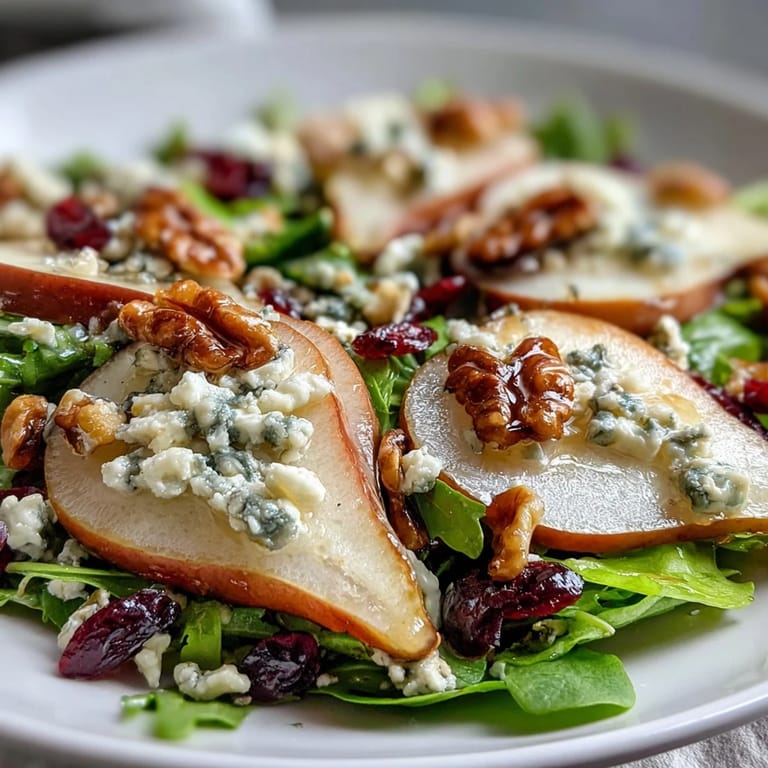
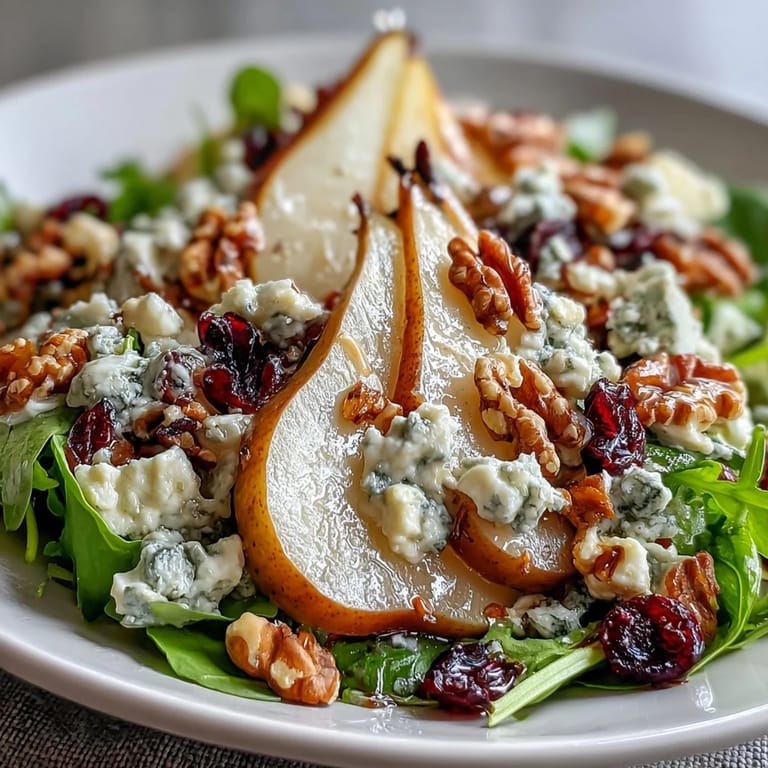
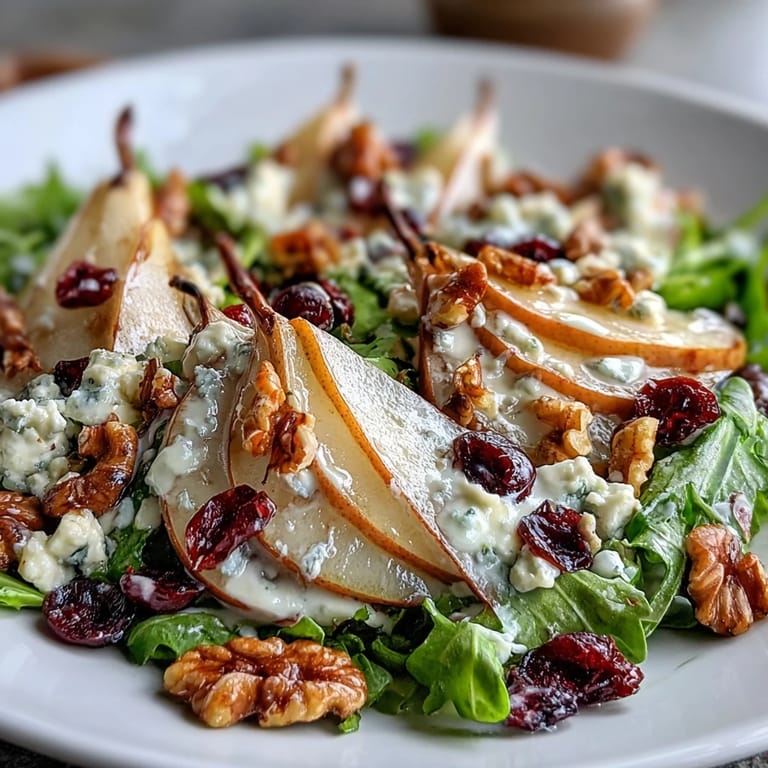
- Arrange the thin pear slices over the greens in a casual, artful way—they don't need to be perfect. Scatter the Gorgonzola crumbles and chopped walnuts over the top, adding the cranberries if you're using them.
- Finish and serve:
- Drizzle the remaining dressing over everything just before plating, which keeps the pears from weeping into the salad and getting soggy. Plate immediately and eat right away while textures are still distinct.
 Save to Pinterest
 There was an evening when a friend pushed her plate away and said, 'This doesn't taste like salad, it tastes like someone actually cared,' and I realized she was right. It's not fancy or complicated, but it has a generosity to it—the way the ingredients respect each other instead of fighting for attention.
The Pear Factor
Pears are delicate things, and their ripeness makes all the difference in this salad. A ripe pear brings a honey-like sweetness and silky texture that softens the funk of the Gorgonzola, while an underripe pear will fight against it and leave you disappointed. I've learned to buy pears a couple days before I need them and let them sit on the counter, checking them gently each day—the moment they yield slightly to pressure is the moment they're ready.
Why Gorgonzola Wins
You might think blue cheese is aggressive in a salad, but Gorgonzola is actually the diplomatic version—it's creamier and less sharp than its blue cheese cousins, with this subtle earthiness that somehow plays beautifully with fruit. The contrast of something soft and crumbly against crisp greens and juicy pears creates this texture conversation that makes every bite interesting. It's bold without being overwhelming, which is exactly the kind of ingredient you want as the backbone of something simple.
Variations That Work
Once you understand why this salad works, you can start playing with it. Roquefort brings more intensity if you love that funky kick, while aged goat cheese would shift the whole vibe toward something tangier and lighter. Pecans instead of walnuts taste a bit sweeter, and hazelnuts bring an almost chocolate-like undertone that's unexpectedly stunning with pear. If you're cooking for someone who wants protein, grilled chicken breast sliced thin and laid over the top turns this from side dish to main course without changing a single other thing.
- Swap the dried cranberries for pomegranate seeds for more texture and a different kind of brightness.
- Try adding thinly shaved Parmesan instead of some of the Gorgonzola if you want less funk and more delicacy.
- A tiny splash of champagne vinegar instead of balsamic creates a more delicate dressing if you're going for understated elegance.
 Save to Pinterest
 This salad taught me that simple food can be memorable when you choose ingredients thoughtfully and let them speak for themselves. It's the kind of thing that reminds you why you cook at all.
Recipe FAQs
- → What type of pears work best?
Firm but ripe pears like Bosc, Anjou, or Bartlett hold their shape well when sliced. Avoid overly soft pears as they can become mushy in the salad.
- → Can I make this ahead?
Prepare all components in advance, but toss with dressing just before serving to maintain crispness. The dressing can be made up to 3 days ahead and stored refrigerated.
- → What can substitute Gorgonzola?
Roquefort, blue cheese, or Stilton work beautifully. For a milder flavor, try feta or goat cheese. Vegan blue cheese alternatives are also available.
- → How do I prevent pears from browning?
Toss sliced pears with a little lemon juice immediately after cutting. The ascorbic acid prevents oxidation and keeps them looking fresh.
- → Can I add protein?
Grilled chicken, poached salmon, or even prosciutto make excellent additions. For vegetarians, consider adding toasted pecans or extra cheese.
- → What other nuts can I use?
Pecans, hazelnuts, or sliced almonds work wonderfully. Toast them lightly beforehand to enhance their natural flavor and crunch.