 Save to Pinterest
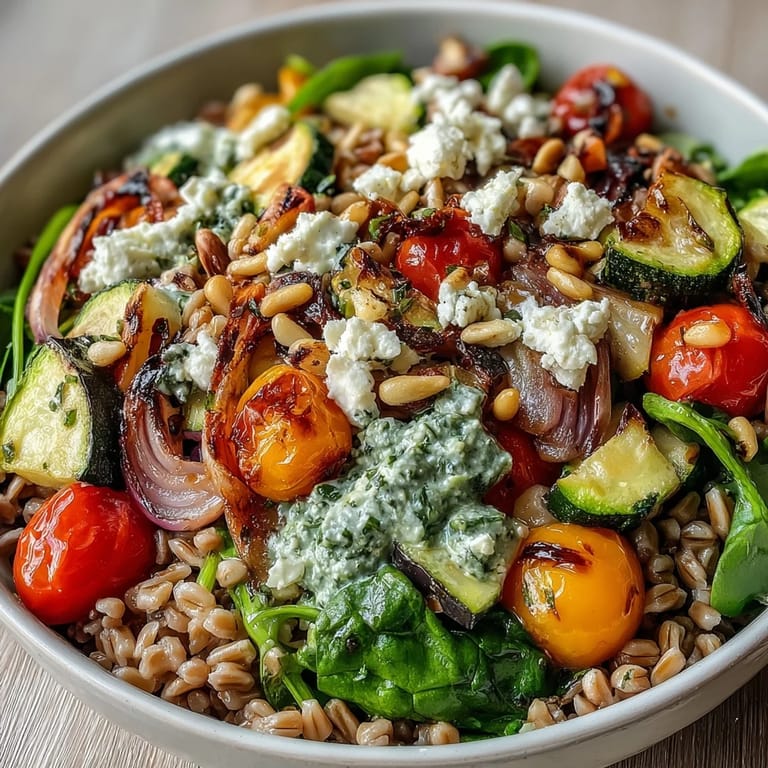
 There's something about the way farro catches light in a bowl that makes you slow down. I discovered this pasta dish on a Tuesday afternoon when my garden had finally burst with zucchini and peppers all at once, and I needed something that felt both substantial and bright. The nutty grain paired with those charred vegetables and a sharp lemon dressing became the kind of meal I found myself making every week after that, tweaking it slightly depending on what was in the crisper drawer.
I'll never forget bringing this to a potluck at my neighbor's place and watching people go back for seconds, then thirds, asking if there was feta in it and whether I'd share the recipe. That moment taught me that wholesome food doesn't have to be boring or complicated to impress people—sometimes it just needs to be made with actual care.
Ingredients
- Farro pasta: This 250 g base brings a chewy, slightly earthy character that regular pasta can't quite match; cook it just until al dente so it doesn't turn mushy under the weight of the vegetables.
- Zucchini: Diced into roughly quarter-inch pieces so it softens but doesn't disappear into the pan, one medium one gives you substance without overwhelming the other vegetables.
- Red and yellow bell peppers: One of each gives you visual drama and a sweet note that balances the earthiness of everything else; dice them similar to the zucchini for even cooking.
- Cherry tomatoes: Halved so they burst slightly when tossed with the hot pasta, about 150 grams worth contributes acidity without making the dish watery.
- Baby spinach: Added at the very end so it wilts from residual heat, keeping its bright green color and adding minerals without bitterness.
- Red onion: Finely sliced so it perfumes the pan without overpowering; one small one is just enough to add sharpness and complexity.
- Garlic: Two minced cloves bloom in hot oil before the vegetables go in, building a flavor foundation that makes everything taste more intentional.
- Extra virgin olive oil: The 60 ml in the dressing is where you don't skimp—this is the element that brings all the brightness together, so use something you'd actually want to taste.
- Lemon juice: Freshly squeezed, not bottled, because that tartness is what keeps this from tasting heavy; 2 tablespoons hits the right balance.
- Dried oregano: A teaspoon distributed through the dressing gives you that Mediterranean whisper without making it taste like you raided an Italian spice rack.
- Sea salt and black pepper: Half a teaspoon and a quarter teaspoon respectively; taste as you go because you can always add more but you can't take it back.
- Feta cheese: Crumbled just before serving so it stays in distinct little pockets rather than melting into submission; about 60 grams gives you flavor without drowning everything in dairy.
- Fresh parsley and toasted pine nuts: Both optional but genuinely transformative; the parsley brings a fresh herbaceous note and the pine nuts add a subtle toasted richness that makes people wonder what you did differently.
Tired of Takeout? 🥡
Get 10 meals you can make faster than delivery arrives. Seriously.
One email. No spam. Unsubscribe anytime.
Instructions
- Get the water boiling and the pasta going:
- Fill a large pot with salted water and let it come to a rolling boil—the salt matters because it's your only chance to season the pasta itself. Add your farro pasta and cook according to package directions until it's al dente, which usually means around 10–12 minutes, then drain it in a colander and set it aside.
- Build your flavor base in the skillet:
- Heat 2 tablespoons of olive oil in a large skillet over medium heat until it shimmers slightly, then add your sliced red onion and minced garlic. Let them sauté for about 2 minutes until the kitchen smells unmistakably delicious and the garlic has softened but not browned.
- Add the vegetables and let them get to know each other:
- Toss in your diced zucchini, both bell peppers, and halved cherry tomatoes, stirring occasionally. After about 6–8 minutes you'll notice the peppers starting to soften and the tomatoes beginning to blister slightly, which is exactly when you know they're ready.
- Wilt the spinach and finish the vegetables:
- Stir in your baby spinach and let it cook for just 1–2 minutes until it's silky and dark green. Remove the skillet from heat immediately so you don't accidentally turn those vegetables into mush.
- Make your dressing while everything rests:
- In a small bowl, whisk together the remaining olive oil, freshly squeezed lemon juice, dried oregano, sea salt, and black pepper. Taste it on your finger and adjust the seasoning if it needs more brightness or salt; this is your chance to get it exactly right.
- Bring it all together:
- In a large bowl, combine your cooked farro pasta with the sautéed vegetables and pour the dressing over everything. Toss gently but thoroughly so every piece of pasta gets coated in that silky, herb-flecked oil.
- Plate and garnish:
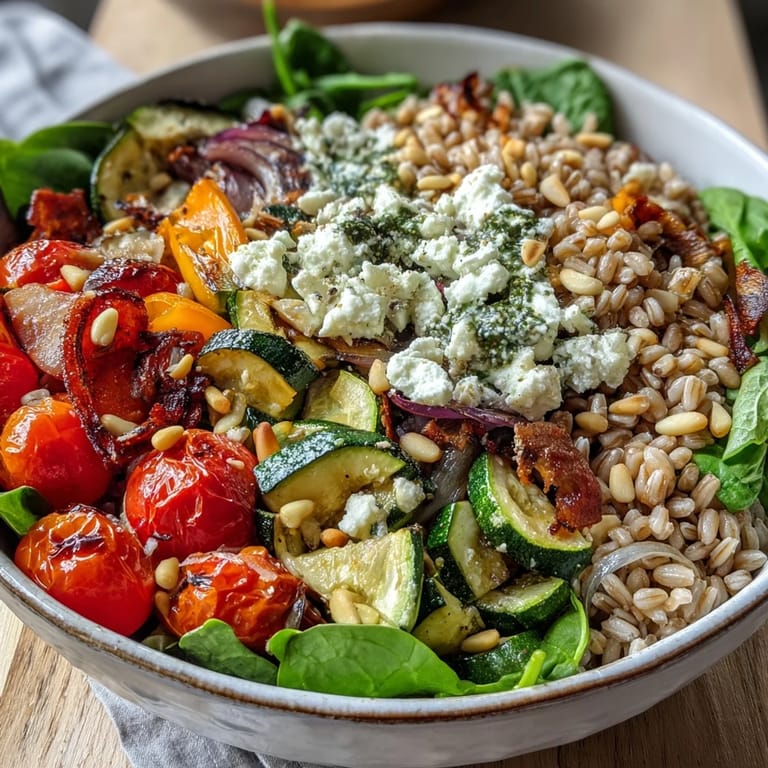
- Divide the pasta bowl among serving dishes and top each one with crumbled feta, fresh parsley if you have it, and toasted pine nuts if you're feeling generous. Serve it warm, at room temperature, or even chilled the next day—it's genuinely good all three ways.
 Save to Pinterest
 There was this one evening when my kitchen felt chaotic and tired, and I made this bowl almost out of habit, but something about the ritual of tossing everything together in that big bowl with the dressing made the whole day feel deliberate again. Food like this has a quiet way of reminding you that taking care of yourself through what you eat is actually a form of care.
Why This Grain Matters
Farro is one of those ancient grains that feels trendy now but has actually been feeding people for thousands of years, and once you taste its chewy texture and subtle nuttiness, you understand why it stuck around. Unlike regular pasta, it has enough body and flavor to stand up to bold dressings and vegetables without getting lost or turning into mush, which means you're not just eating a delivery vehicle for toppings—you're eating something that contributes its own character to the dish.
Making It Your Own
The beauty of this bowl is that it's genuinely flexible without becoming a free-for-all; you can swap vegetables based on what's at the market or what you're craving, add protein like chickpeas or grilled chicken if you want more substance, or shift it toward a cold salad by chilling everything after dressing it. I've made versions with roasted eggplant instead of zucchini, added shredded carrots for crunch, and once threw in some white beans because that's what was in the pantry and it turned out to be exactly right.
Storage and Next-Day Magic
This is one of those rare dishes that tastes better after a night in the refrigerator because the flavors marry and the grains absorb the dressing more completely, though you might want to add a splash of olive oil and lemon juice when you're about to eat it to freshen everything up. It keeps beautifully for about three days in an airtight container, making it the kind of meal prep that actually feels exciting to eat.
- If you're eating it cold, let it come to room temperature first so the flavors wake up and the feta doesn't taste as harsh.
- You can assemble everything except the feta the night before and just add the cheese and garnishes when you're ready to eat.
- This freezes moderately well if you leave off the fresh herbs and cheese, though the vegetables will lose some of their texture, so really it's best eaten fresh or within a few days.
 Save to Pinterest
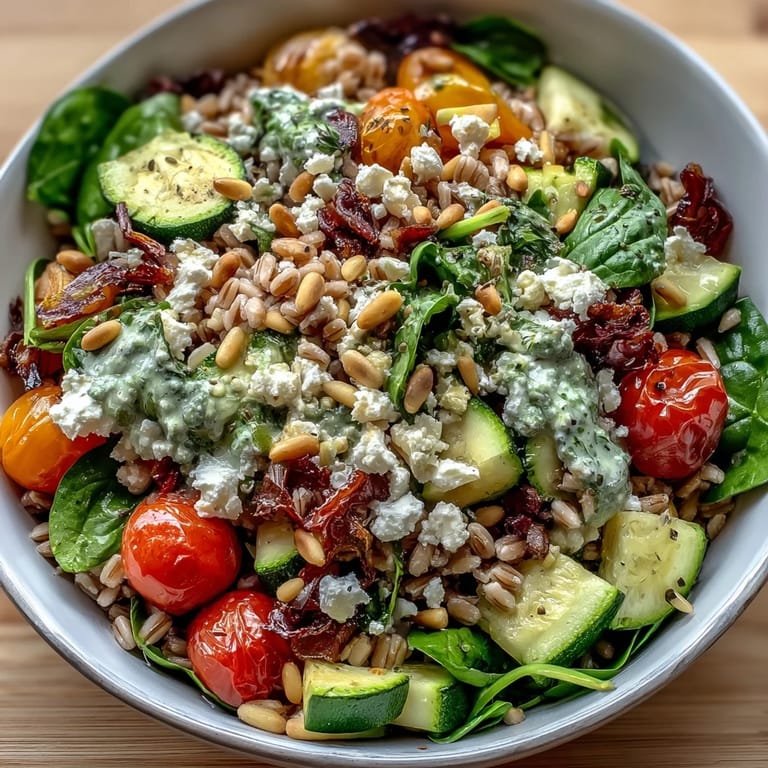
 This bowl has become my answer to the question of what to cook when you want something that feels nourishing and intentional but doesn't require you to stand in front of the stove for hours. Make it once and you'll understand why it became the meal I come back to again and again.
Recipe FAQs
- → Can I use regular farro instead of farro pasta?
Yes, whole farro works well as a substitute. Cook it for 20-25 minutes until tender, then proceed with the recipe as written. The texture will be slightly chewier but equally delicious.
- → How long does this keep in the refrigerator?
The dressed bowl stores well for 2-3 days in an airtight container. However, for best texture, add the fresh spinach and feta just before serving leftovers.
- → What can I use instead of feta cheese?
Try goat cheese, halloumi, or a vegan feta alternative. For a dairy-free option, additional toasted pine nuts or chopped olives provide savory richness.
- → Can I make this gluten-free?
Substitute farro pasta with quinoa, brown rice, or certified gluten-free pasta. Adjust cooking time according to package instructions for your chosen grain.
- → Is this suitable for meal prep?
Absolutely. Cook all components and store separately. Reheat the grain and vegetable mixture, then add fresh dressing, spinach, and toppings when ready to eat.
- → Can I add protein to make it more filling?
Yes, grilled chicken, chickpeas, white beans, or shrimp all complement the Mediterranean flavors. Add about 1 cup of cooked protein across the four servings.