 Save to Pinterest
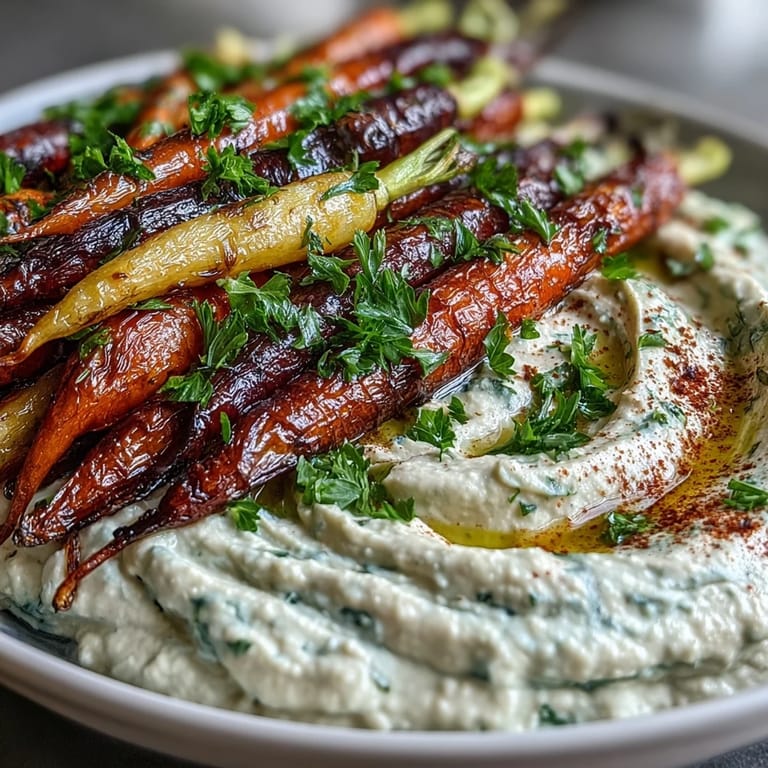
 My kitchen smelled like caramelizing carrots and toasted tahini the afternoon I realized food didn't need to be complicated to feel special. A friend texted asking what I was making, and when I said rainbow carrots with hummus, she showed up thirty minutes later with wine and curiosity. That simple platter became the reason we sat talking until sunset, passing bites back and forth like we were tasting color itself.
There was a Tuesday when I made this for a potluck I almost didn't attend, exhausted and wanting to stay home. I threw it together anyway, and watching someone try it for the first time, eyes closing slightly at how good the tahini was, reminded me why I cook at all.
Ingredients
- Rainbow carrots, 1 lb peeled and trimmed: The different colors aren't just for looks; purple and yellow carrots have subtly different sweetness levels, and when they roast together they create this naturally complex flavor.
- Olive oil, 2 tbsp plus 2 more for hummus: Use something you actually like tasting, not the cheapest bottle, because it's the star here alongside the carrots and tahini.
- Sea salt and freshly ground black pepper: Freshly cracked pepper changes everything; pre-ground tastes flat by comparison, and you'll notice the difference immediately.
- Ground cumin, 1/2 tsp optional but recommended: This is what makes people ask what the secret ingredient is; it whispers rather than shouts, warmth instead of spice.
- Tahini, 1/4 cup: Buy the good kind from a store where they actually sell it regularly, not the jar that's been sitting in the back since last year.
- Chickpeas from a 15 oz can, drained and rinsed: Rinsing them really matters because it removes the starchy liquid that makes hummus gluey instead of silky.
- Lemon juice, 2 tbsp fresh squeezed: Bottled lemon juice tastes like disappointment; fresh juice is bright and alive and makes hummus actually taste like something.
- Garlic, 1 clove minced: One small clove is enough; hummus should taste like garlic is visiting, not moving in permanently.
- Cold water, 2 to 3 tbsp: Add it slowly while blending so you don't accidentally make hummus soup; you can always add more but you can't take it out.
- Smoked paprika for garnish: A tiny sprinkle at the end catches the light and tastes like smoky richness without overpowering anything.
- Fresh parsley, 1 tbsp chopped: This is the final note of green; it feels like finishing a thought properly instead of just stopping mid-sentence.
Tired of Takeout? 🥡
Get 10 meals you can make faster than delivery arrives. Seriously.
One email. No spam. Unsubscribe anytime.
Instructions
- Heat your oven and prepare the workspace:
- Set your oven to 425°F and line a baking sheet with parchment paper so cleanup is almost nonexistent later. This temperature is hot enough that the carrots will get edges and sweetness.
- Coat and arrange the carrots:
- In a bowl, toss your carrots with olive oil, salt, pepper, and cumin if you're using it, then spread them in one layer on the sheet. Try to keep them mostly in a single layer so they roast instead of steam.
- Roast until caramelized:
- Pop them in the oven for 25 to 30 minutes, giving them a stir halfway through so they brown evenly. You'll know they're done when the edges look slightly charred and the thick parts are fork-tender.
- Build the hummus while carrots roast:
- Put your drained chickpeas, tahini, olive oil, lemon juice, minced garlic, cumin, and salt into a food processor. Blend until it looks creamy, then start adding cold water one tablespoon at a time until it reaches that perfect spoonable consistency.
- Taste and adjust:
- This is the step people skip, but your salt and lemon balance might need tweaking depending on your specific tahini and lemon. Add a tiny pinch of salt or squeeze of lemon and taste again if something feels off.
- Plate everything:
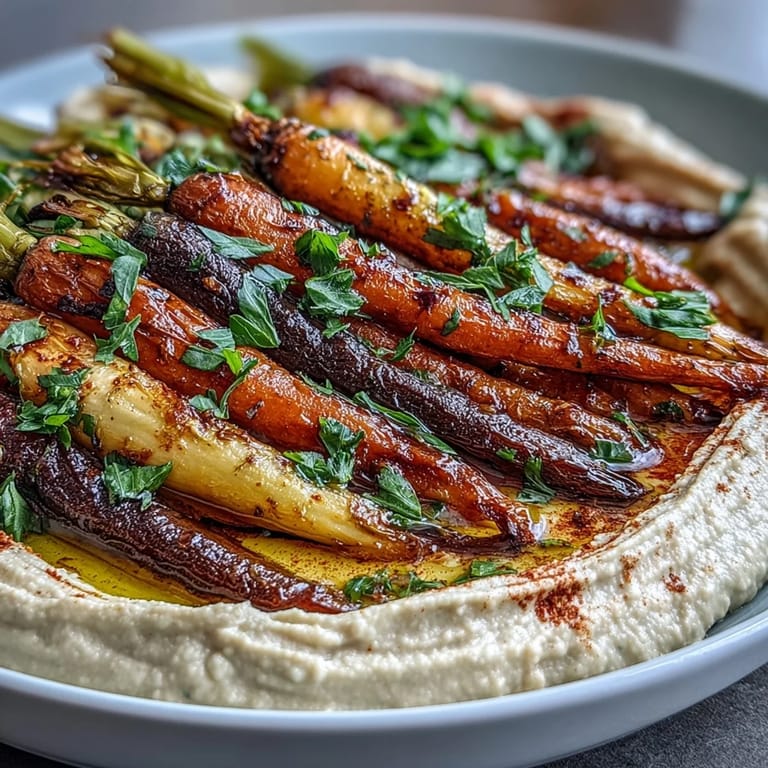
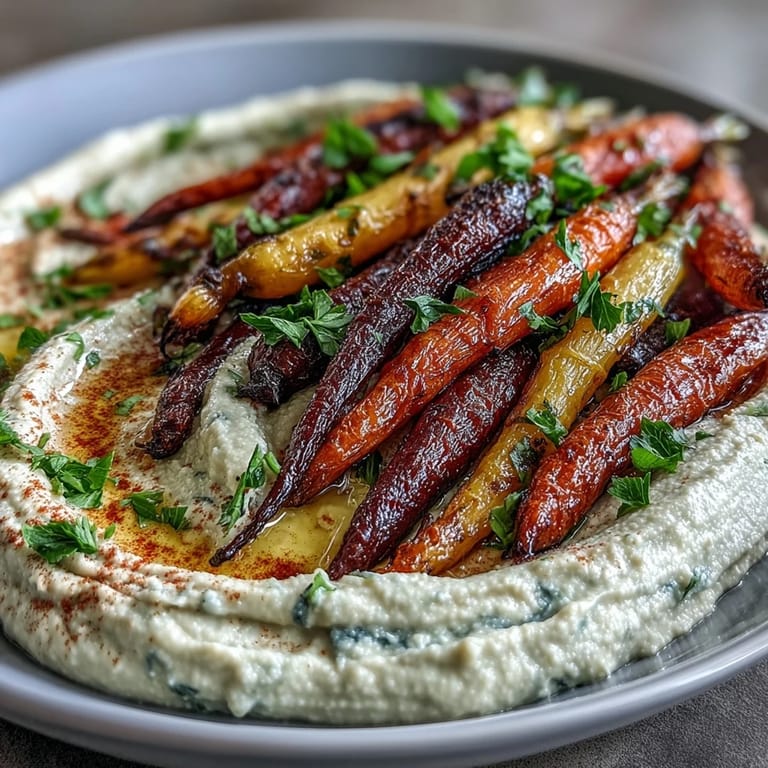
- Pour the hummus into a serving bowl and drizzle a little olive oil across the top, then dust with smoked paprika if you have it. Arrange the warm carrots on a platter nearby, sprinkle with fresh parsley, and bring it to the table while the carrots still have warmth.
 Save to Pinterest
 I learned something watching my grandmother eat this for the first time: she took a warm carrot, dragged it through the hummus, and closed her eyes like she was tasting memory. Food is partly what's on the plate, partly about who you're with when you eat it.
Why Rainbow Carrots Matter
There's a reason people go out of their way to find rainbow carrots instead of just buying orange ones at any grocery store. Each color has its own personality; the purple ones taste slightly earthier, the yellow ones are sweeter, and together they create this naturally layered flavor that feels special without effort. When they roast, the colors actually deepen, and the thinner ones get crispy at the edges while the thicker ones stay tender inside. It's vegetables reminding you that nature doesn't need help to be beautiful or delicious.
The Tahini Difference
Hummus tastes like a completely different food depending on how much tahini you use, and most store-bought versions are too light on it, leaving you wondering why it doesn't taste rich and complex like the good stuff at Mediterranean restaurants. Tahini is ground sesame seeds, and it brings this creamy, slightly bitter, deeply savory quality that makes hummus actually taste like something instead of just beans. The ratio matters, but also the quality matters; tahini from a tin tastes noticeably different than tahini from a jar, and sesame seeds that were toasted before grinding versus raw are worlds apart. If you ever wondered why restaurant hummus tastes better, it's partly this.
Serving and Storing Thoughtfully
Serve the carrots while they're still slightly warm or at room temperature, because cold roasted carrots lose some of their sweetness and caramel character. The hummus will keep in a sealed container in the refrigerator for about four days, and honestly it's almost better the next day after flavors have melded together overnight. You can also make the components separately ahead of time if you're serving this for guests, keeping the carrots in a warm place and the hummus in the fridge until the moment you're ready to plate.
- If your hummus seems too thick after sitting overnight, just whisk in a touch of cold water to loosen it back up.
- Leftover roasted carrots work great in grain bowls, salads, or just eaten straight from the fridge as a snack.
- This recipe doubles easily if you're feeding more people, and both components scale beautifully.
 Save to Pinterest
 This dish taught me that simple food shared with care tastes better than complicated food eaten alone. Make it when you want people to linger at your table a little longer.
Recipe FAQs
- → How do I know when the carrots are done roasting?
The carrots are ready when they're tender when pierced with a fork and have golden-brown caramelized edges. This typically takes 25-30 minutes at 425°F. Turn them halfway through for even cooking.
- → Can I make the hummus ahead of time?
Absolutely. The hummus stores well in an airtight container in the refrigerator for up to 5 days. It may thicken when chilled—simply stir in a little water or olive oil to restore creaminess before serving.
- → What can I serve with this besides carrots?
This hummus pairs beautifully with raw vegetables like cucumber slices, bell pepper strips, or celery. For a heartier option, serve with warm pita bread, crackers, or use as a spread on sandwiches and wraps.
- → Is this dish suitable for meal prep?
Yes. Roasted carrots reheat well in the oven at 350°F for 10 minutes or can be enjoyed at room temperature. Store components separately in the refrigerator for up to 4 days for best texture and flavor.
- → Can I substitute regular carrots for rainbow carrots?
Regular orange carrots work perfectly fine. Rainbow carrots offer visual appeal and subtle flavor variations, but the cooking method and taste remain essentially the same with standard carrots.
- → How can I make the hummus extra creamy?
For the smoothest texture, blend the tahini and lemon juice first for a minute before adding other ingredients. Also, remove the skins from chickpeas by rubbing them between towels—this extra step yields exceptionally silky results.