 Save to Pinterest
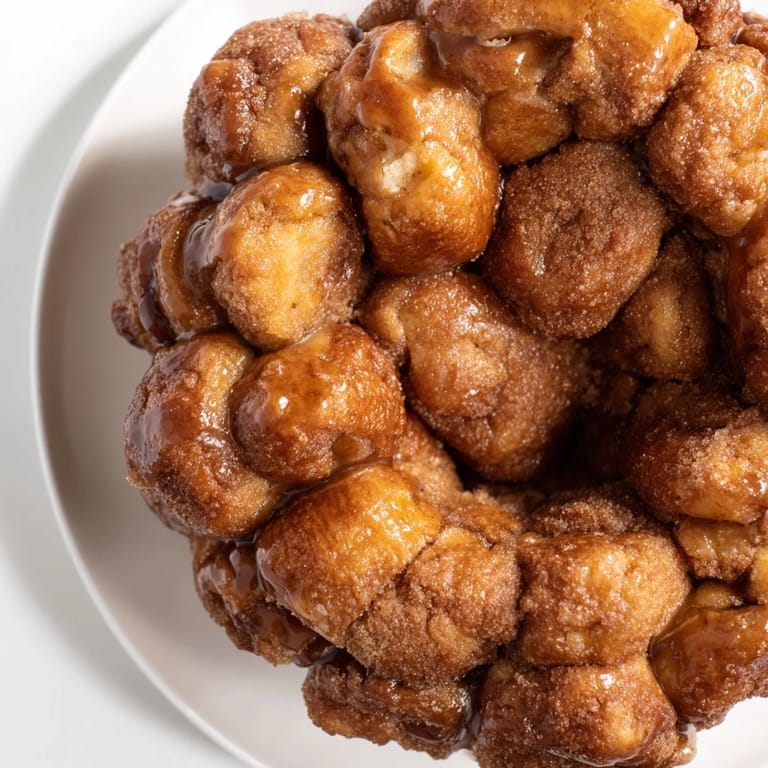
 My neighbor's kitchen always smelled like cinnamon on Sunday mornings, and one day she handed me a warm slice of monkey bread still sticky from the oven. I watched her pull it apart piece by piece, each one coated in that caramelized cinnamon sugar, and realized this wasn't fancy—it was just pure joy in bread form. That moment made me decide to learn how to make it myself, and now it's become the thing I reach for when I want to turn breakfast into something memorable.
I brought this to a holiday potluck once, expecting it to sit on the table alongside more impressive dishes. Instead, people kept coming back for one more piece, peeling away the butter-soaked balls of dough while their coffee went cold. It became the thing everyone asked about, and I realized that sometimes the most craveable food is the simplest—no pretense, just warmth and sweetness.
Ingredients
- All-purpose flour (4 cups): The foundation that makes the dough tender and slightly pillowy; too much flour makes it dense, so measure by spooning and leveling, not scooping.
- Instant dry yeast (2¼ tsp): This is what makes the bread rise and become light—make sure it's fresh or the dough won't puff up properly.
- Granulated sugar (¼ cup for dough): A small amount feeds the yeast and adds subtle sweetness to the dough itself.
- Salt (1 tsp): Enhances flavor and controls yeast activity; don't skip it.
- Warm milk (¾ cup): Use milk that's warm to the touch but not hot, or you'll kill the yeast.
- Unsalted butter, melted (¼ cup for dough, ½ cup for coating): Melted butter makes the dough rich and helps it rise; keep it separate for dipping.
- Eggs (2 large): They bind the dough and add richness that makes each bite tender.
- Cinnamon sugar coating (1 cup sugar mixed with 2 tsp cinnamon): This is where the magic happens—toast the cinnamon in a dry pan first if you want the flavor to sing.
- Powdered sugar (1 cup for optional glaze): Creates a light drizzle that adds sweetness without weight.
Tired of Takeout? 🥡
Get 10 meals you can make faster than delivery arrives. Seriously.
One email. No spam. Unsubscribe anytime.
Instructions
- Mix and knead the dough:
- Combine your dry ingredients in a large bowl, then add the warm milk, melted butter, and eggs. Stir until everything comes together into a shaggy mass, then knead for 5–7 minutes until the dough becomes smooth and springs back when you poke it.
- Let it rise in warmth:
- Oil a bowl lightly, nestle your dough inside, cover it with a damp towel, and find a warm spot—a turned-off oven with the light on, a sunny windowsill, or anywhere around 75°F. In an hour, it should double in size.
- Prepare your coating station:
- Mix cinnamon and sugar in one small bowl and pour melted butter into another. This is your assembly line—you'll dip and roll quickly.
- Shape the dough into balls:
- Punch down the risen dough to release the air, then cut it into 40 pieces and roll each between your palms into a smooth ball. It's meditative work, and your hands will smell wonderful.
- Coat each ball with butter and cinnamon sugar:
- Dip each ball into the melted butter, then roll it in the cinnamon sugar mixture until coated. As you layer them into your greased bundt pan, you're building flavor and texture in every layer.
- Let them rise a second time:
- Cover the pan loosely and set it somewhere warm for 20–30 minutes until the dough balls look slightly puffy but not completely touching.
- Bake until golden:
- Preheat your oven to 350°F and bake for 30–35 minutes, watching until the top turns a deep golden brown and the edges pull slightly from the pan sides.
- Cool briefly, then unmold:
- Let the pan sit for 10 minutes so the butter and sugar set slightly, then run a thin knife around the edges and invert onto a serving plate in one confident motion.
- Optional glaze finish:
- Whisk powdered sugar with milk and vanilla until pourable, then drizzle it over the warm bread while it's still slightly sticky.
 Save to Pinterest
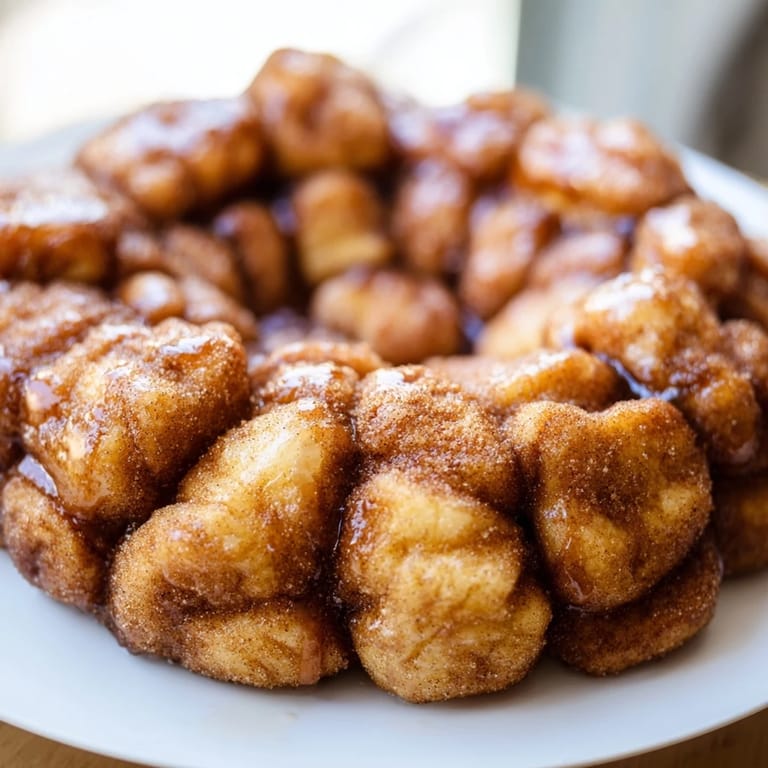
 The best version of this bread happens when you eat it still warm, standing in the kitchen with someone else, both of you pulling pieces apart without thinking. That's when it stops being a recipe and becomes a small, edible moment of connection.
Why Monkey Bread Wins Every Time
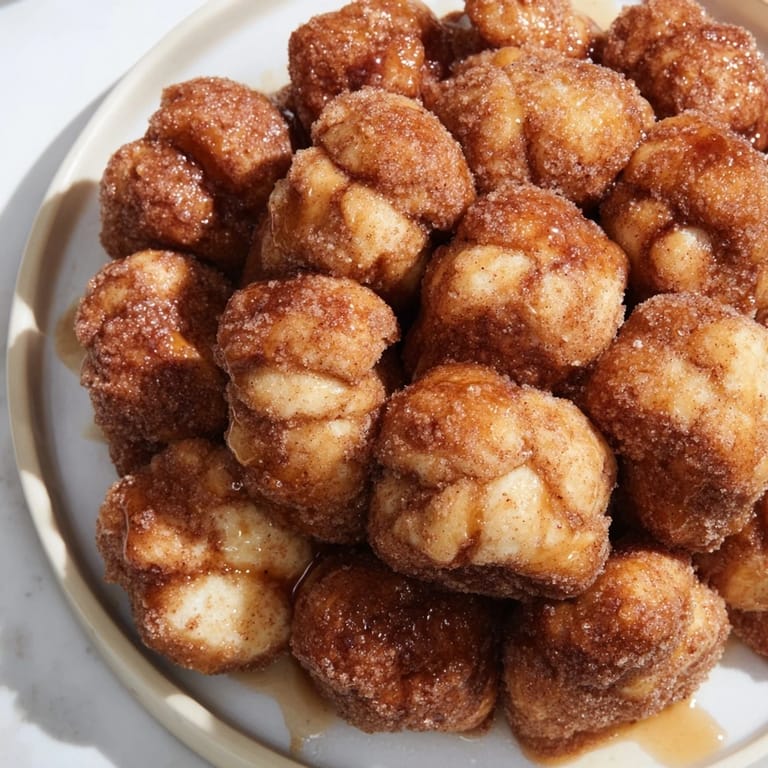
There's something about the way people interact with this bread that's different from other desserts. No one waits for a proper slice—they just dive in, peeling away piece after piece, getting their fingers sticky and laughing about it. It's permission to be messy and indulgent, and that's partly why it feels so good to eat.
The Magic of Layering
As you layer each buttered, cinnamon-sugared ball into the bundt pan, you're not just arranging dough—you're creating pockets of caramelized sweetness that will pool and stick everything together as it bakes. The center pieces end up the stickiest, the outer pieces get a little more structure, and that variation in texture is exactly what makes this recipe interesting.
Make It Yours
Once you understand the basic technique, this bread becomes a canvas for small changes. Some people swirl a little brown sugar into the mix, others add chopped nuts or a pinch of nutmeg to the coating. The structure stays solid because it's really just about coating and layering—the rest is improvisation.
- Toast your cinnamon in a dry pan for 30 seconds before mixing it with sugar to deepen the flavor without added ingredients.
- If you have extra dough, roll a few balls and freeze them raw—you can bake fresh monkey bread another morning with minimal prep.
- Don't skip the 10-minute rest after baking; it lets the caramelized sugar on the pan bottom set just enough to release cleanly.
 Save to Pinterest
 Monkey bread is the recipe that teaches you that simple ingredients and patient hands can create something that tastes far more indulgent than it should. Make it once and it'll become your go-to for whenever you want to turn an ordinary morning into something people actually remember.
Recipe FAQs
- → What type of flour works best?
All-purpose flour provides a balanced texture suitable for soft, tender dough balls in this bread.
- → How do I achieve a sticky, pull-apart texture?
Coating dough balls in melted butter and cinnamon sugar before baking creates a sticky, tender pull-apart finish.
- → Can I add nuts for extra flavor?
Chopped pecans or walnuts can be layered between dough balls to add crunch and enhance sweetness.
- → What is the best way to bake this bread evenly?
Using a well-greased bundt pan and allowing dough to rise twice ensures even baking and a golden crust.
- → Is the optional glaze necessary?
The vanilla glaze adds smooth sweetness but can be skipped if preferred to enjoy the bread's natural cinnamon butter flavor.
- → How should I store leftovers?
Store in an airtight container at room temperature for up to two days to maintain softness and flavor.