 Save to Pinterest
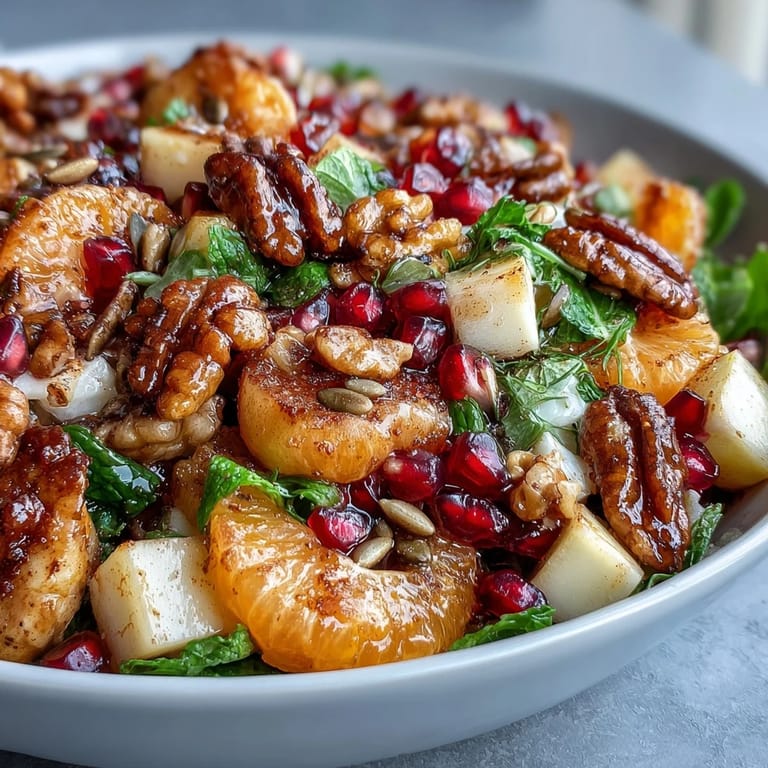
 My neighbor knocked on my door one December morning with a pomegranate in hand, insisting I'd been missing out on winter eating. She showed me how to score and crack it open over water, and those jewel-like seeds tumbling into the bowl felt like a small revelation. That salad she made that afternoon—tossed with walnuts and a whisper of cinnamon—became the dish I'd recreate whenever I needed something that felt both nourishing and celebratory at once.
I served this to my book club last January when someone mentioned feeling sluggish after the holidays. Watching everyone's faces light up as they tasted that bright, complex flavor—the tartness of pomegranate, the warmth of cinnamon, the richness of walnut—reminded me that sometimes the simplest dishes do the most good. One guest asked for the recipe before she even finished her bowl.
Ingredients
- Pomegranate (1 large): The star that brings tartness and those satisfying bursts of juice—worth the few minutes spent separating seeds over water to avoid the pink stains on your hands.
- Orange (1 large): A natural sweetness that balances the pomegranate's bite and adds brightness that feels almost effervescent.
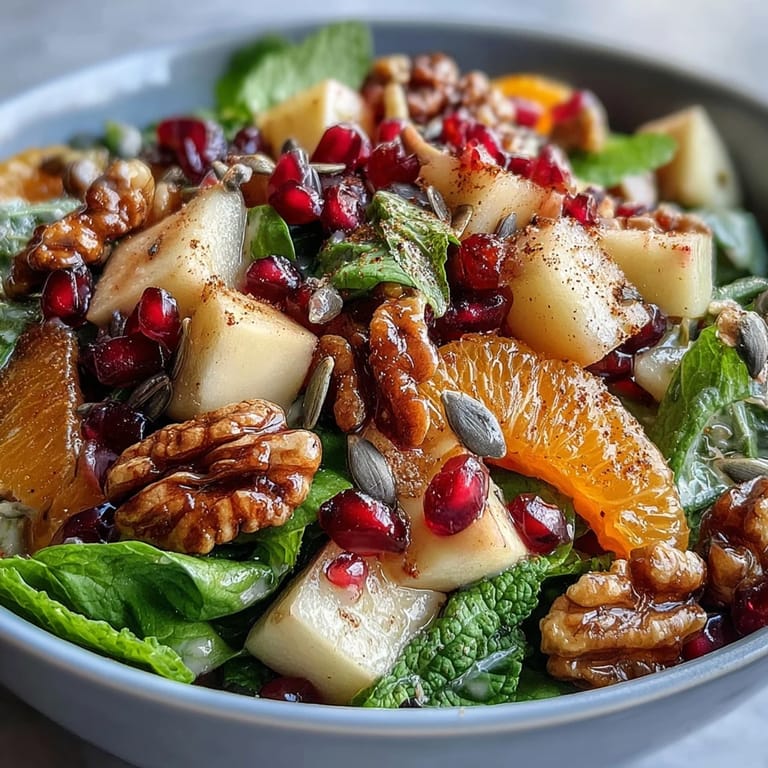
- Apple (1 crisp): Choose something like Granny Smith or Pink Lady for texture that holds up in the dressing rather than turning mushy.
- Pear (1 ripe): The subtle sweetness works like a gentle undertone, adding weight without overpowering.
- Walnuts (1/2 cup, roughly chopped): Toast them lightly for an earthy depth that makes the whole salad feel more substantial.
- Pumpkin seeds and sunflower seeds (2 tbsp each): These add a protein-rich crunch that keeps the salad from feeling too light or fruit-forward.
- Extra-virgin olive oil (2 tbsp): The quality matters here since it's the backbone of your dressing—don't skip on a good one.
- Lemon juice (1 tbsp, freshly squeezed): Fresh is non-negotiable; bottled juice changes the brightness entirely.
- Honey or maple syrup (1 tsp): Just enough to marry the sharp and earthy elements without sweetening the salad.
- Ground cinnamon (1/4 tsp): The secret ingredient that people will taste but can't quite name—it bridges fruit and nuts beautifully.
- Sea salt (pinch): Brings everything into focus and makes the flavors pop.
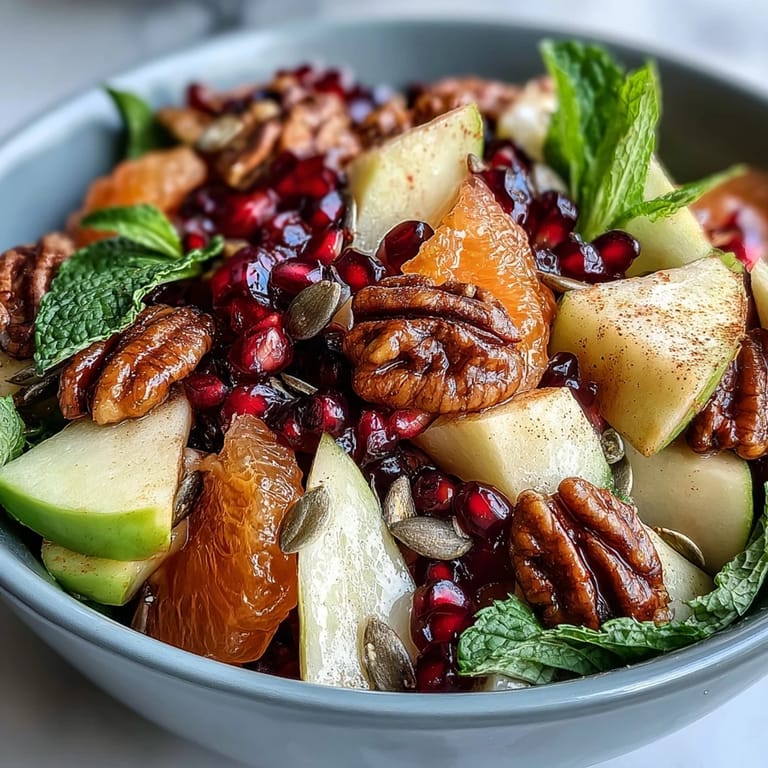
- Fresh mint leaves (2 tbsp, optional): Adds a cool finish that feels seasonal and intentional.
Tired of Takeout? 🥡
Get 10 meals you can make faster than delivery arrives. Seriously.
One email. No spam. Unsubscribe anytime.
Instructions
- Gather and prepare your fruits:
- Work over a bowl when you cut the pomegranate so you catch all those precious seeds and their juice. Peel your orange and separate it into segments, dice your apple and pear, and let everything sit together for a moment—you'll start noticing how the colors complement each other.
- Toast your nuts and seeds (optional but recommended):
- Drop them into a dry pan over medium heat for just a few minutes until fragrant. This step only takes a couple minutes but transforms the whole salad from fresh to genuinely craveable.
- Add the crunch:
- Toss the chopped walnuts and seeds into your bowl with the fruit. The combination of textures is what makes this feel special rather than just another salad.
- Make the dressing:
- Whisk the olive oil, lemon juice, honey, cinnamon, and salt together in a separate bowl until it tastes balanced to you—a little tart, a little sweet, a little earthy. This is where you can adjust to your preference.
- Bring it all together:
- Pour the dressing over everything and toss gently so you don't bruise the delicate fruit. The goal is coating, not drowning.
- Finish and serve:
- Scatter the mint over top if you're using it and serve right away, or refrigerate for up to two hours if you want the flavors to deepen and meld. Either way works beautifully.
 Save to Pinterest
 My daughter asked me once why this salad felt fancy even though it was so easy, and I realized it's because of all the small choices—the cinnamon, the toasted nuts, the freshly squeezed lemon. Those details don't take longer but they signal care. Now whenever she comes home from school stressed, she asks me to make this, and somehow it always helps.
The Magic of Pomegranate
Pomegranates intimidate people because of the mess, but they're worth it. The easiest way is to cut them in half, hold them over a bowl of water, and tap the back with a spoon so the seeds fall out—the water keeps the juice from splattering everywhere. You end up with pristine seeds and barely any staining. I learned this trick the hard way after my first pomegranate adventure left me looking like I'd been in a minor accident.
Texture as Flavor
This salad works because no single texture dominates. The soft fruit, crunchy nuts and seeds, and silky dressing create a conversation in your mouth rather than a monologue. I've noticed people eat more slowly and deliberately when there's this kind of textural variety—they're not just filling their plate, they're actually tasting.
Flexibility and Swaps
The beauty of this salad is that it bends without breaking. In late fall I add persimmons instead of pears, in spring I might use kiwi or strawberries, and sometimes I swap walnuts for pecans when I find really good ones. The cinnamon-honey-lemon dressing anchors everything so the fruit can change with the season.
- Swap the pear for persimmon, kiwi, or even pomegranate's second pomegranate if you're feeling fruit-forward.
- Toast your walnuts in a dry skillet for three to four minutes until they smell nutty—don't walk away or they'll burn.
- Make the dressing in a jar and shake it vigorously instead of whisking if you're short on dishes.
 Save to Pinterest
 This salad has become my answer for the in-between seasons when you want something that feels both light and substantial. It's proof that you don't need complicated techniques or exotic ingredients to create something memorable.
Recipe FAQs
- → How long can this fruit and nut bowl be stored?
This fresh bowl tastes best served immediately, though it can be refrigerated for up to two hours before serving. The dressing may soften the nuts and seeds over time, so add them just before eating if preparing ahead. For maximum freshness, keep the dressing separate until ready to serve.
- → Can I substitute the fruits in this bowl?
Absolutely. Swap pears for persimmons, replace apples with kiwi, or add seasonal favorites like clementines or blood oranges. The combination remains flexible based on what's available. The key is maintaining a balance of juicy fruits with crisp textures.
- → What's the best way to remove pomegranate seeds efficiently?
Score the pomegranate around the middle, then pull it apart into sections. Working underwater in a bowl, gently pop the seeds out from the white membrane. The seeds will sink while the pith floats, making separation easy. This method also prevents juice splatters on your cutting board.
- → Should I toast the walnuts and seeds before adding?
Light toasting enhances the nutty flavors and adds extra crunch. Place walnuts, pumpkin seeds, and sunflower seeds in a dry pan over medium heat for 2-3 minutes until fragrant. Watch closely since seeds and nuts can burn quickly. Let cool completely before tossing with the fresh fruits.
- → Is this bowl suitable for vegan diets?
Simply replace the honey with maple syrup to make this bowl completely vegan. The olive oil, lemon juice, and cinnamon are naturally plant-based. Maple syrup provides similar sweetness while maintaining the intended flavor profile of the citrus dressing.
- → What main dishes pair well with this fruit bowl?
The bright, refreshing flavors complement roasted chicken, grilled fish, or light vegetarian grain bowls. It also works beautifully alongside a cheese board featuring soft cheeses like goat cheese or brie. The citrus notes cut through rich main dishes while the nuts provide satisfying substance.