 Save to Pinterest
 The first time I made peanut brittle, I was trying to impress my grandmother who'd been making it for decades. I stood at her stove with the thermometer, my hands shaking slightly as the sugar syrup turned from pale amber to deep golden, wondering if I'd know the exact moment to pull it off heat. When that baking soda hit the mixture and it erupted into this foamy, airy cloud, I nearly dropped the pan—but somehow that chaos turned into the crunchiest, most buttery candy I'd ever tasted. She tasted a piece, nodded, and said nothing, which I later learned was her way of saying it was perfect.
I remember my neighbor stopping by unexpectedly one December afternoon and leaving with a tin of this brittle. She came back three days later just to ask how I made it, and we ended up in the kitchen together while she watched the thermometer climb. There's something about making candy with someone else in the room that turns it into a shared moment instead of just a kitchen task.
Ingredients
- Granulated sugar (1 cup): This is your foundation—it caramelizes into that deep, complex flavor that makes brittle taste like caramel with an edge.
- Light corn syrup (1/2 cup): This prevents crystallization and keeps your brittle smooth and glassy rather than grainy, which was a hard lesson I learned the first time.
- Water (1/4 cup): Just enough to help everything dissolve evenly at the start; it cooks off as you go.
- Salt (1/4 tsp): A whisper of salt that makes every other flavor sing without announcing itself.
- Unsalted butter (2 tbsp): Cut into pieces so it melts quickly and distributes evenly through the hot sugar.
- Vanilla extract (1 tsp): Added at the last second to preserve its delicate flavor in the heat.
- Roasted, unsalted peanuts (1 1/2 cups): Already roasted means they stay crispy and don't cook further in the hot candy, keeping that perfect crunch.
- Baking soda (1 tsp): This is the magic—it aerates the mixture and gives brittle its signature light, shattery texture.
Tired of Takeout? 🥡
Get 10 meals you can make faster than delivery arrives. Seriously.
One email. No spam. Unsubscribe anytime.
Instructions
- Set up your stage:
- Line a baking sheet with parchment paper or a silicone mat and lightly grease it. You want to be ready to move fast once the candy reaches temperature, so this is your chance to slow down and prepare.
- Dissolve the sugar gently:
- In a heavy-bottomed saucepan over medium heat, combine sugar, corn syrup, water, and salt. Stir gently until the sugar dissolves completely and the mixture looks smooth, about 2-3 minutes. This gentle stirring prevents crystals from forming on the sides of the pan.
- Let it boil undisturbed:
- Bring the mixture to a boil without stirring—this is crucial. Attach a candy thermometer to the side of the pan, making sure it doesn't touch the bottom. Crystals can form if you stir once it's boiling, so trust the process and just watch.
- Chase the temperature:
- Continue boiling until the thermometer reads 300°F (the hard crack stage), which takes about 10-15 minutes depending on your stove. The mixture will deepen from pale amber to a rich golden brown—this is where the flavor happens. Watch it carefully; it can go from perfect to burnt faster than you'd think.
- Work quickly at the finish:
- Remove from heat immediately and stir in the butter and vanilla extract. The mixture will bubble slightly as the cold butter hits the hot sugar. Quickly add the peanuts and stir well to coat everything evenly.
- Add the baking soda magic:
- Sprinkle in the baking soda and stir briskly. The whole mixture will foam up, lighten in color, and become airy—this is exactly what you want. Don't stop stirring until it's completely incorporated.
- Spread and cool:
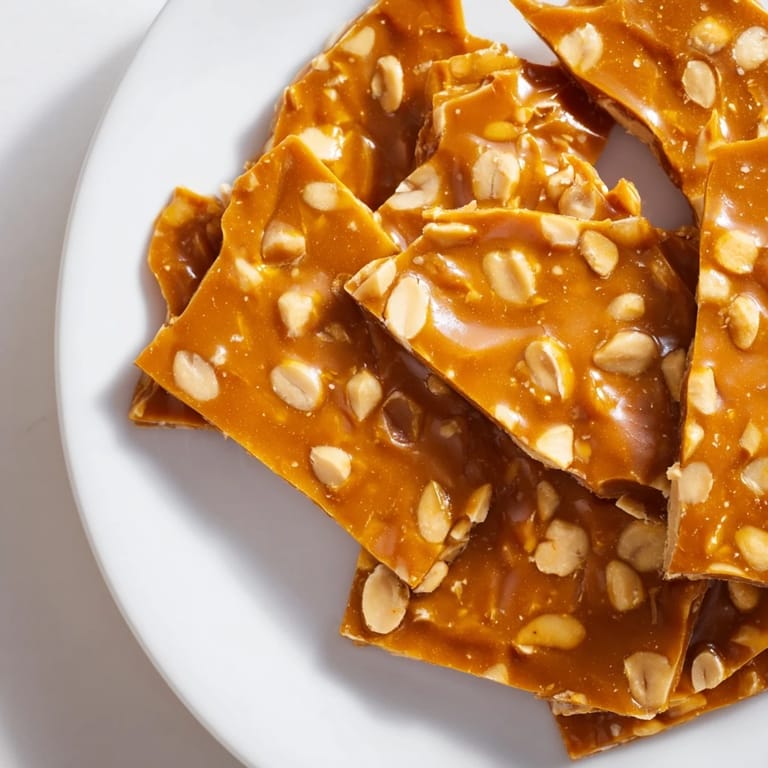
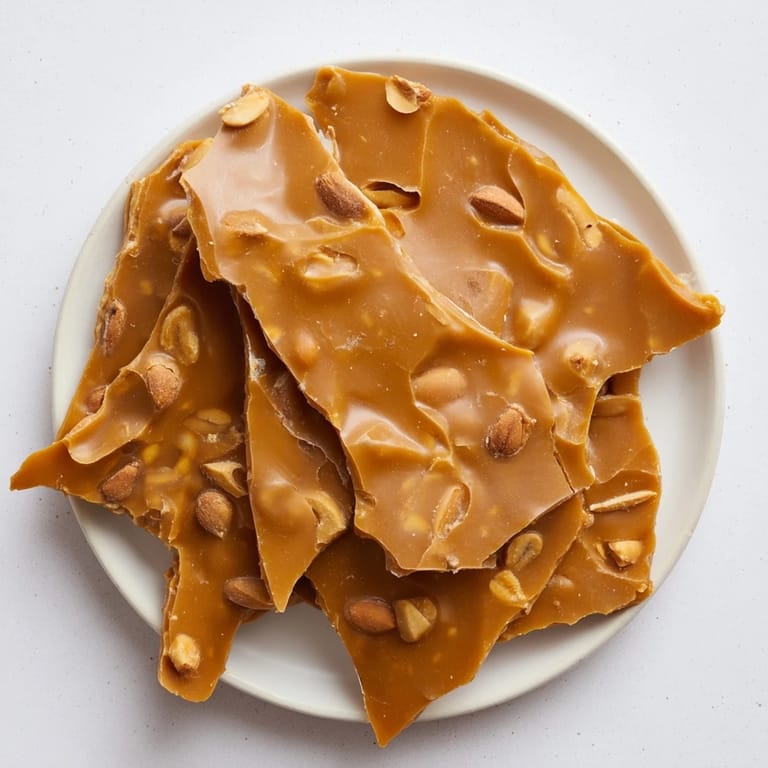
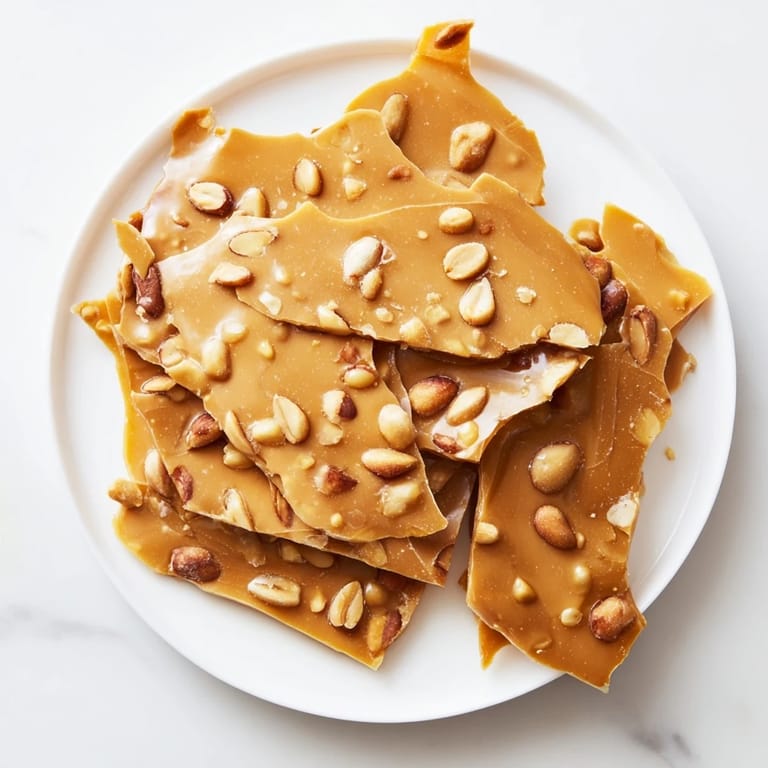
- Pour the brittle immediately onto the prepared baking sheet. Using a greased spatula, spread it thinly and evenly, aiming for about 1/4 inch thick. Work quickly but carefully; it hardens as it cools, and you want an even thickness throughout. Let it cool completely, about 30 minutes, then break into irregular pieces.
 Save to Pinterest
 One winter, a friend who'd been going through a difficult time asked if I'd make her some brittle. I spent an afternoon in the kitchen, and when she opened the tin, her face changed completely. She told me years later that it was the first time something felt like home again.
The Thermometer is Your Best Friend
I used to eyeball the color and guess at temperatures, but that's how you end up with batches that don't set properly or taste burnt. A candy thermometer removes all the guesswork and gives you confidence that you're hitting exactly the right stage every time. Clip it securely to the side of the pan and check it frequently as you approach 300°F; the last few degrees happen fast.
Why Peanuts Are Perfect for This
Roasted peanuts stay crispy throughout the cooking process because they're already cooked, which is why they work so beautifully in brittle. The heat doesn't soften them further; instead, the hot toffee sets around them, locking in that satisfying crunch. Cashews, almonds, or pecans work just as well if you want to experiment, but raw nuts will soften in the heat.
Storage, Variations, and Last-Minute Thoughts
Keep your brittle in an airtight container at room temperature, and it'll stay crispy for up to two weeks. The enemy is moisture, so don't refrigerate it—that draws condensation and turns your crunch into a soggy mess. If you want to experiment, try adding a sprinkle of flaky sea salt over the top just before it sets, or swap in different nuts entirely to create your own signature version.
- For extra crunch and visual appeal, scatter a pinch of fleur de sel over the brittle while it's still warm and slightly sticky.
- Double-check that your saucepan is truly heavy-bottomed; thin pans create hot spots that cook the sugar unevenly and can scorch it.
- If your brittle turns out sticky instead of crispy, the humidity was likely too high—wrap pieces individually in wax paper and store in a sealed container with desiccant packets.
 Save to Pinterest
 Making peanut brittle is one of those small kitchen rituals that connects you to everyone who's ever made it before you. Once you've done it once, you'll find yourself making it again and again, each batch a little gift to yourself or someone you care about.
Recipe FAQs
- → What stage should the sugar mixture reach during cooking?
The mixture needs to reach the hard crack stage, about 300°F (150°C), to achieve the right brittle texture.
- → Can I substitute peanuts with other nuts?
Yes, cashews, almonds, or pecans work well for a different nutty flavor and texture.
- → How can I prevent the brittle from sticking to the baking sheet?
Lightly grease the baking sheet or use parchment paper or a silicone mat before pouring the mixture.
- → What is the purpose of baking soda in this confection?
Baking soda causes the mixture to foam and lighten in color, creating a more delicate texture.
- → How should this sweet snack be stored?
Store in an airtight container, away from humidity, to maintain freshness for up to two weeks.