 Save to Pinterest
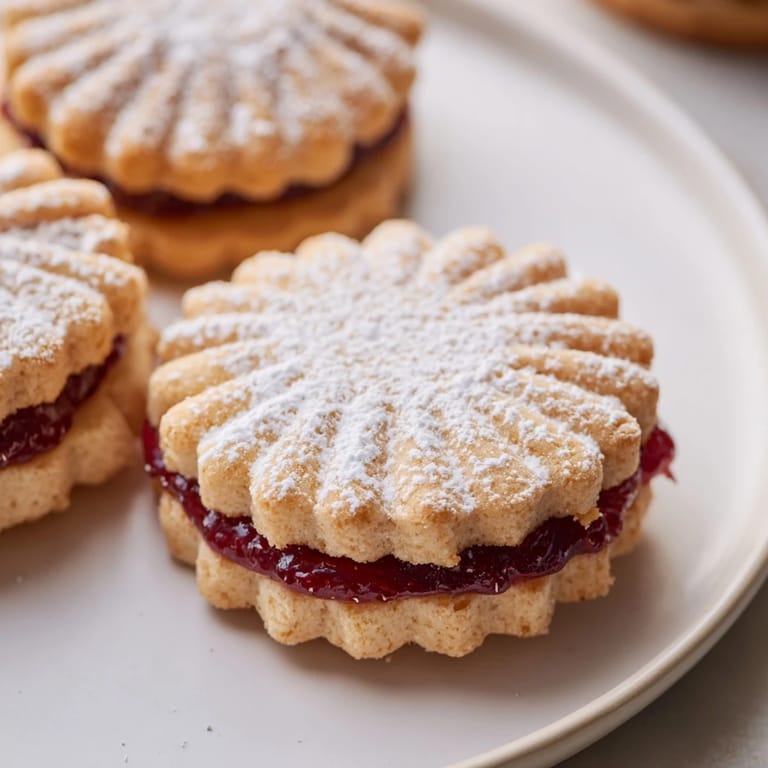
 There's something about the precise geometry of Linzer cookies that caught me off guard the first time I attempted them. I'd been browsing through my grandmother's collection of Austrian cookbooks, dusty and dog-eared, when a photograph of those distinctive latticed windows stopped me cold. The jam glowing through like stained glass seemed impossible to achieve in my own kitchen, yet here I am, years later, pulling batch after batch from the oven. These buttery almond rounds have become my quiet ritual on winter afternoons.
I'll never forget bringing these to my book club, expecting polite appreciation, and instead watching my usually reserved neighbor close her eyes after one bite and ask for the recipe before finishing the first cookie. That moment made me understand that Linzer cookies aren't just dessert; they're edible proof that you cared enough to get the details right.
Ingredients
- All-purpose flour (2 cups / 250 g): This is your structure; don't skip it even though the almond flour tempts you to. Measure by weight if you can, since those extra grams of flour change everything about how the dough handles.
- Almond flour (1 cup / 100 g): Finely ground blanched almonds add a tender crumb and that haunting, almost sweet undertone. Store it in the freezer to keep the oils from going rancid.
- Ground cinnamon (1/2 teaspoon): A whisper, not a shout. This isn't a snickerdoodle; the cinnamon should make people wonder what they're tasting.
- Salt (1/4 teaspoon): Non-negotiable for balancing sweetness and making the almond flavor pop.
- Unsalted butter (3/4 cup / 170 g), softened: Let it sit on the counter for 15 minutes before you start; cold butter won't cream properly, and that creaming step is where the magic happens.
- Powdered sugar (2/3 cup / 80 g for dough): This dissolves seamlessly into the butter, creating an impossibly tender crumb.
- Egg yolk (1 large): Just the yolk, not the white. Save the white for something else; the yolk contributes richness and the right amount of moisture.
- Pure vanilla extract (1 teaspoon): Don't cheap out here. The difference between real and imitation vanilla is everything in a cookie this delicate.
- Lemon zest (1/2 teaspoon grated): Microplane it fresh right before you need it; zest loses its brightness within an hour of being grated.
- Seedless raspberry jam (3/4 cup / 225 g): The quality of your jam determines the quality of your cookies. A jam with real fruit and minimal pectin sits better between the cookies than something overly thick and artificial.
- Powdered sugar (1/4 cup / 30 g for dusting): A final whisper of sweetness and elegance on top.
Tired of Takeout? 🥡
Get 10 meals you can make faster than delivery arrives. Seriously.
One email. No spam. Unsubscribe anytime.
Instructions
- Combine your dry goods:
- Whisk flour, almond flour, cinnamon, and salt in a medium bowl until the cinnamon disappears into the flour. This distributes the spice evenly so you don't get hot spots of cinnamon in any one cookie. Set aside and forget about it for a moment.
- Cream butter and sugar:
- Beat softened butter and powdered sugar in a large bowl for 2 to 3 minutes until the mixture is pale, fluffy, and significantly increased in volume. This is where you're incorporating air, which makes these cookies tender instead of dense.
- Build the wet mixture:
- Add egg yolk, vanilla, and lemon zest to the creamed butter, beating until the mixture looks homogeneous and smooth. Stop and scrape the bowl halfway through so you don't miss any hidden pockets of butter.
- Bring dough together:
- Add the dry ingredients to the wet mixture gradually, stirring just until a cohesive dough forms. Overmixing develops gluten and makes cookies tough; stop as soon as you can't see streaks of flour.
- Chill and rest:
- Divide dough into two disks, wrap each in plastic, and refrigerate for at least 1 hour. You can do this the day before; cold dough is easier to roll and produces cleaner cuts.
- Heat your oven:
- Preheat to 350°F (175°C) and line two baking sheets with parchment paper. A cool oven can cause cookies to spread too much before they set.
- Roll with confidence:
- On a lightly floured surface, roll one dough disk to 1/8 inch (3 mm) thickness. If the dough fights you, let it rest for 5 minutes; it'll relax and become cooperative.
- Cut the bottoms:
- Using a 2-inch round or fluted cutter, cut as many cookies as you can and place them on prepared baking sheets. These are your solid bases.
- Cut the windows:
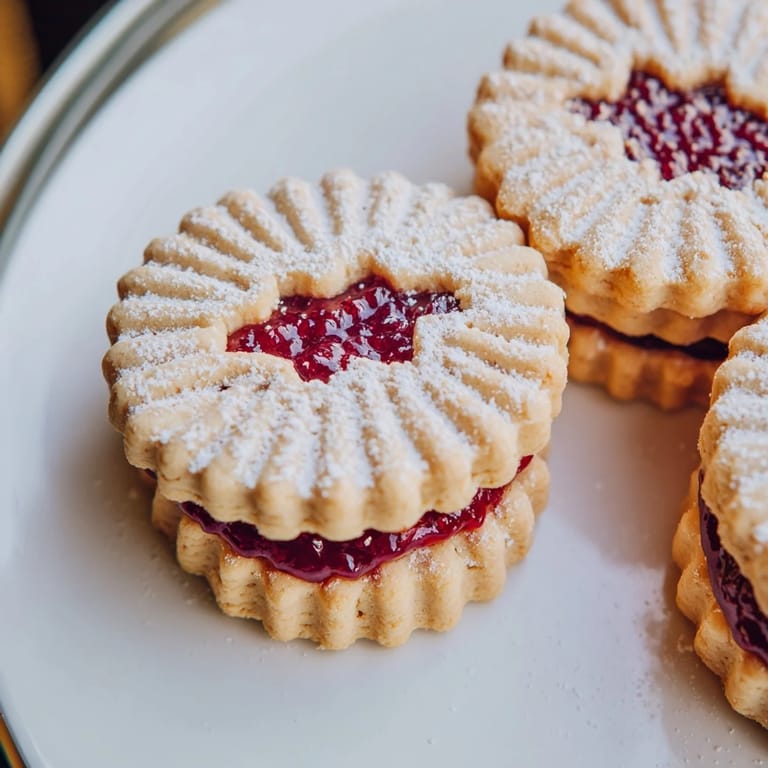
- From the remaining dough, cut out more 2-inch shapes, then use a smaller 1-inch cutter to remove the centers. These latticed tops are where the jam peeks through.
- Rescue the scraps:
- Gather all dough scraps, press them together gently, chill for 5 minutes if they're warm, and re-roll. You should get one or two more cookies from this.
- Bake until golden:
- Bake for 10 to 12 minutes until the edges turn pale golden but the centers still feel slightly soft. They'll firm up as they cool.
- Cool with patience:
- Let cookies rest on the baking sheet for 2 minutes, then transfer to a wire rack. Cookies continue cooking on hot pans, so don't rush this step.
- Dust the tops:
- Once completely cool, dust the cookies with cutout windows with powdered sugar. This catches the light and makes them look like they came from a Vienna café.
- Assemble with jam:
- Spread approximately 1 teaspoon of raspberry jam onto the flat side of each solid cookie. Don't be stingy, but don't overfill either; too much jam will squeeze out when you press the tops on.
- Create the sandwich:
- Press a sugared top cookie gently onto each jam-laden base, aligning the windows so the jam shows through. The jam will start to set as you work.
- Let rest and set:
- Allow the assembled cookies to rest at room temperature for at least 30 minutes before serving. The jam needs this time to firm up and hold everything together.
 Save to Pinterest
 I still remember my neighbor's teenage daughter asking for seconds before her mother had even finished the first one, and the way they sat together in comfortable silence afterward, not talking, just appreciating. That's when I realized these cookies aren't about technical perfection; they're about creating a moment where people slow down.
The Austrian Tradition Behind These Cookies
Linzer cookies are part of an old Viennese tradition that dates back centuries, though they've evolved considerably from their more elaborate ancestors. The iconic latticed window isn't just decoration; it's a practical solution that makes every bite a balance of cookie, jam, and air. In Austria, these still appear on holiday tables, wrapped in tissue paper and tucked into decorative boxes, treated with the reverence usually reserved for fine jewelry.
Why the Technique Matters More Than You'd Think
The real difference between a mediocre Linzer cookie and an exceptional one often comes down to one overlooked step: the resting period after chilling the dough. Recipes rarely mention why this matters, but it's the difference between a dough that tears when you cut the windows and one that releases cleanly. The gluten relaxes, the fat distributes more evenly, and the dough becomes almost silky to work with. Rushing this step has sabotaged more batches than I care to admit.
Small Changes That Make a Difference
These cookies are forgiving in most ways, but details matter when you're aiming for something special. Swapping raspberry jam for apricot jam gives you a slightly earthier, more complex flavor profile that some find more sophisticated. Blackcurrant jam leans tart and sophisticated, wonderful if your guests appreciate bolder tastes. For a nut-free version, simply replace the almond flour with the same weight of all-purpose flour, though you'll lose some of that subtle nuttiness that makes these memorable.
- Always taste your jam before baking; an unusually sweet jam might need a tiny squeeze of lemon to balance the cookies.
- If your kitchen runs warm, work with one dough disk at a time and keep the other refrigerated until you're ready to use it.
- Store finished cookies in an airtight container with parchment between layers so they don't stick; they keep for five days and actually taste better on day two.
 Save to Pinterest
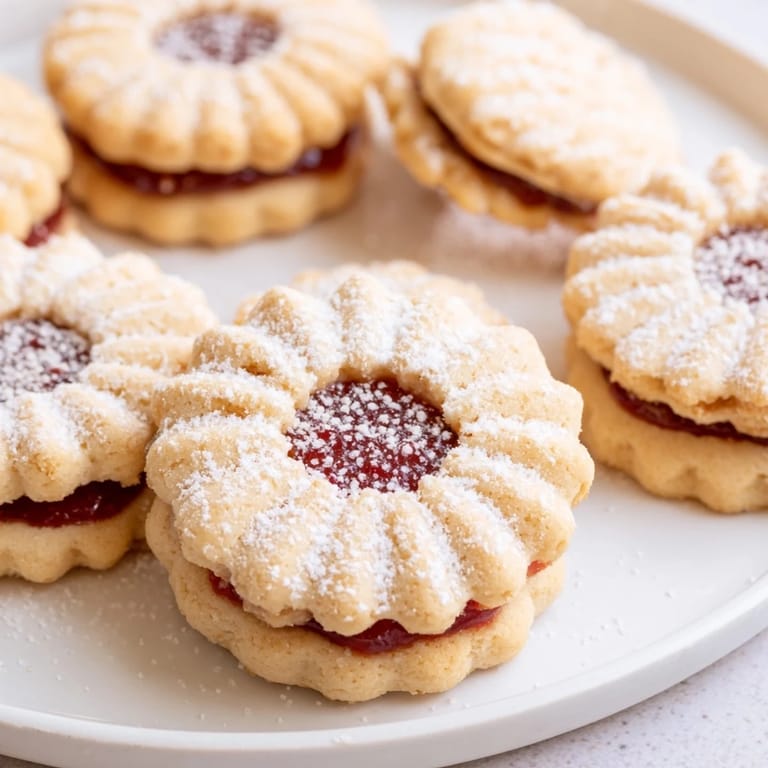
 These cookies have become my answer to the question of what gift to bring when you want to show care without words. There's something about the care required to make them—the precise cuts, the patient chilling, the careful assembly—that translates into something people can taste.
Recipe FAQs
- → What makes the almond flour important in these cookies?
Almond flour contributes a tender texture and nutty flavor, enhancing the cookies' delicate crumb and richness.
- → How do I create the lattice pattern on top?
The lattice is made by cutting smaller shapes out of cookie tops with a 1-inch cutter or fluted cutter before baking.
- → Can the raspberry jam be substituted?
Yes, apricot or blackcurrant jam can be used for variation without affecting the structure.
- → Why is chilling the dough necessary?
Chilling firms the dough, making it easier to roll thinly and maintain shape during baking.
- → How should these cookies be stored?
Store in an airtight container at room temperature for up to 5 days to keep them fresh.