 Save to Pinterest
 My first beignet wasn't at Café du Monde—it was at midnight in a cramped apartment kitchen with a friend who'd just moved back from New Orleans, determined to prove that homemade ones could rival the real thing. We were skeptical, mostly because we'd never worked with yeast dough before, but watching that simple mixture transform into pillowy squares that puffed up golden in hot oil felt like mild magic. The powdered sugar went everywhere, of course, covering the counter, our hands, our faces, but that's when I understood why these things had become legendary. They weren't just fried dough; they were pure joy in edible form.
I made these for a small gathering once, and someone said they tasted like they'd been transported back to a street corner in the French Quarter—which meant everything considering I'd made them on a Tuesday night in my regular kitchen. That's the strange power of beignets: they carry memory and place in every bite, making whoever eats them feel like they're part of something bigger and older and deeply loved.
Ingredients
- All-purpose flour (3 1/2 cups): This is your foundation—measure by weight if you can, as it's more reliable than scooping from the bag, which can pack the flour tighter than intended.
- Warm water (1 cup): The temperature matters more than you'd think; too hot and you'll kill the yeast, too cool and it'll wake up sluggishly and your rise will stall.
- Whole milk (1/4 cup): Room temperature milk blends smoothly into the dough without shocking the yeast, and it adds a subtle richness that cuts through the sugar.
- Granulated sugar (1/4 cup): A pinch goes into the yeast activation bowl to feed it; the rest goes into the dry ingredients for subtle sweetness without overwhelming the bread flavor.
- Active dry yeast (2 1/4 tsp): One standard packet, and watching it foam is your first sign that everything will work—if it doesn't foam, start over.
- Egg (1 large): This adds richness and helps the dough puff beautifully when it hits the oil, giving you those characteristic light, airy layers.
- Unsalted butter (2 tbsp, melted): Melt it and let it cool slightly before adding so it doesn't scramble the egg; the butter creates tender crumbs in the finished dough.
- Salt (1 tsp): Don't skip this—it's what makes every other flavor come alive instead of tasting flat and one-dimensional.
- Vegetable oil for frying: Use something with a high smoke point; vegetable or peanut oil work best and won't impart competing flavors.
- Powdered sugar (1 1/2 cups): Buy more than you think you'll need; there's no such thing as too much powdered sugar on a beignet, and you'll lose some to the counter, your clothes, and gravity.
Tired of Takeout? 🥡
Get 10 meals you can make faster than delivery arrives. Seriously.
One email. No spam. Unsubscribe anytime.
Instructions
- Wake up the yeast:
- Combine warm water with a small pinch of sugar and sprinkle the yeast over top. Let it sit for about 5 minutes—you're looking for it to become foamy on the surface, which tells you the yeast is alive and ready to work. If nothing happens, your yeast is dead and you'll need to start fresh.
- Mix the dry foundation:
- In a large bowl, whisk together the flour, remaining sugar, and salt. This step distributes everything evenly so you don't end up with pockets of salt or dry flour hiding in the dough.
- Bring it together:
- Pour the foamy yeast mixture into the dry ingredients along with the milk, egg, and melted butter. Stir until everything is shaggy and rough—don't worry about it looking messy; that's exactly where you want to be.
- Develop the dough:
- Knead for 5 to 7 minutes by hand or with a stand mixer's dough hook until the dough becomes smooth and elastic, with just a slight tackiness. This is where gluten develops, which gives you structure to hold all those air pockets when they fry.
- Let it rise:
- Transfer the dough to a lightly oiled bowl, cover it with plastic wrap or a clean towel, and set it in a warm, undisturbed spot for about 1 to 1.5 hours. You're waiting for it to roughly double in size—if your kitchen is cool, this can take longer, which is fine and actually gives more flavor.
- Shape the pillows:
- Gently punch down the risen dough to release excess gas, then transfer it to a floured work surface and roll it out to about 1/4 inch thick. Using a sharp knife or pizza cutter, cut the dough into 2-inch squares, flouring your cutter as you go to prevent sticking.
- Bring the oil to temperature:
- Heat your oil to exactly 350°F (175°C) in a deep fryer or heavy pot. Use a thermometer; if it's too cool, the beignets will absorb oil and become greasy, and if it's too hot, they'll brown before the inside cooks through.
- Fry until golden:
- Working in batches to avoid crowding, carefully place the dough squares into the hot oil—they'll sink briefly then float as they puff. Fry for about 1 to 2 minutes per side until they're puffed and deep golden brown, then flip them gently with tongs or a slotted spoon.
- Drain and dust:
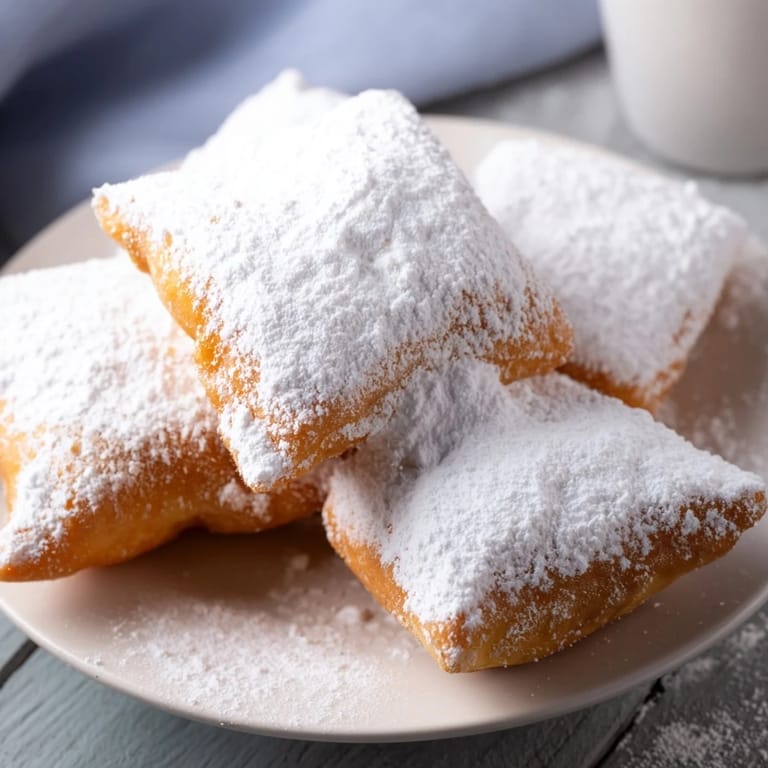
- Transfer the hot beignets to paper towels to drain, then while they're still warm, generously dust them with powdered sugar. Don't be shy—this is what makes them iconic.
 Save to Pinterest
 I remember my neighbor peering over the fence while I was draining these, and without saying a word, I handed her one still warm from the paper towels. That single beignet somehow created this moment of connection that had nothing to do with technique or ingredients and everything to do with offering something good made with care.
The Rise Matters More Than You Think
The first time I tried to rush the rise by using hot water, I thought I was being clever and efficient. The result was beignets that were dense and tough instead of pillowy and tender, because the yeast couldn't work properly under pressure. Now I understand that the rise isn't just about waiting; it's where flavor develops and the gluten network becomes strong enough to trap all those beautiful air pockets that make beignets special. Patience here isn't optional—it's what transforms simple dough into something transcendent.
Frying Without Fear
Hot oil seems intimidating until you realize that respect and a good thermometer are all you need. The first time I used one, I was amazed at how predictable the frying became; the beignets behaved exactly like they were supposed to because the conditions were stable. Since then, I've learned to let the oil settle to temperature, work in smaller batches so nothing gets crowded, and keep the paper towels ready nearby. It's actually meditative once you stop worrying and start paying attention.
Making Them Your Own
The beauty of homemade beignets is that they're a canvas for small personal touches if you want them. Some people add a splash of vanilla extract to the dough, others dust theirs with cinnamon sugar instead of plain powdered sugar, and one friend of mine infuses her oil with a little star anise for something unexpected and delicious. The traditional version will always be perfect, but these are forgiving enough that you can experiment if inspiration strikes.
- Try adding half a teaspoon of vanilla extract to the dough for a subtly different flavor profile.
- Dust with cinnamon sugar or a mixture of both for a spiced twist that still honors the original.
- If you're feeling adventurous, serve alongside flavored dipping sauces like chocolate, fruit coulis, or a touch of honey.
 Save to Pinterest
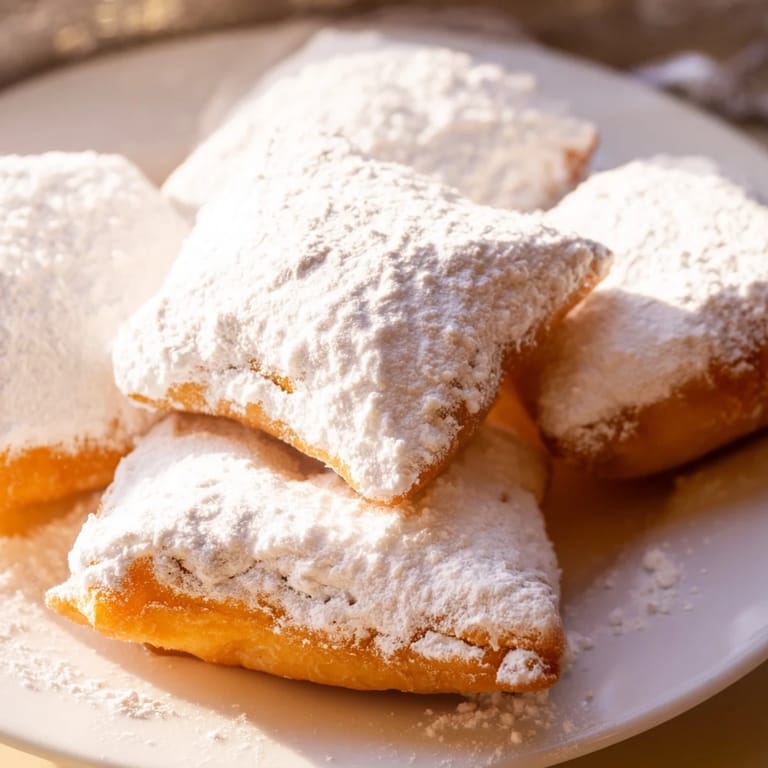
 There's something deeply satisfying about pulling warm beignets from the oil, watching the powdered sugar cloud around your hands, and sharing them with someone while they're still at their absolute best. That's really all there is to it—technique and timing and care, which is true of almost everything worth making.
Recipe FAQs
- → What makes the dough fluffy?
The dough’s fluffiness comes from yeast fermentation, which creates air pockets during rising, and careful kneading that develops gluten for elasticity.
- → How do I know when the oil is ready for frying?
The oil should be heated to 350°F (175°C). Use a thermometer for accuracy, or test by dropping a small piece of dough—it should sizzle and rise to the surface quickly.
- → Can I prepare the dough in advance?
Yes, the dough can be mixed and left to rise at room temperature for about 1 to 1.5 hours. For longer storage, refrigerate and allow it to warm before frying.
- → What’s the best way to serve these fried pillows?
Serve them warm with a generous dusting of powdered sugar. Pairing with café au lait enhances the classic New Orleans experience.
- → Are there any tips to avoid greasy fried dough?
Ensure oil stays at the correct temperature and avoid overcrowding the fryer to maintain crispness and prevent absorption of excess oil.