 Save to Pinterest
 My grandmother used to make divinity every December, and the sound of her electric mixer whipping egg whites into clouds is somehow tied to every happy holiday memory I have. The first time I tried making it myself, I got impatient and poured the hot syrup too fast—it turned into a grainy mess that she politely called "rustic." But something about the challenge stuck with me, and now, decades later, I understand why she loved this candy so much: it's pure magic in your mouth, a confection that feels impossibly delicate and cloud-like, yet surprisingly sturdy once it sets.
I remember making a massive batch for my office potluck years ago, worried the whole time that something would go wrong and I'd show up empty-handed. My coworker Sarah took one piece, closed her eyes, and just said "where did you buy this?" When I admitted I'd made it, she asked for the recipe that very second—and now she makes it for every gift-giving occasion. That moment taught me that homemade divinity isn't just impressive, it's the kind of thing people remember you for.
Ingredients
- Granulated sugar (2 1/2 cups): This is your foundation—the sugar needs to be pure white and fine, so it dissolves smoothly without graininess. Don't skip the corn syrup; it's not just sweetness, it prevents crystallization and keeps your divinity silky.
- Light corn syrup (1/2 cup): This is the secret to that smooth, cloud-like texture; it keeps sugar crystals from forming and ruining your batch.
- Water (1/2 cup): Keep it simple—tap water works fine here, nothing fancy needed.
- Salt (1/4 teaspoon): A tiny pinch that makes the sweetness pop without tasting salty; trust it even though it seems minimal.
- Large egg whites (2), room temperature: Room temperature matters because they whip to stiffer peaks faster and hold their structure better when you add hot syrup; cold eggs will deflate.
- Pure vanilla extract (1/2 teaspoon): Use real vanilla, not imitation—you'll taste the difference in the final candy.
- Chopped pecans or walnuts (1 cup): Toast them lightly if you want deeper flavor, though it's not required; they add the crunch that balances the airy sweetness.
Tired of Takeout? 🥡
Get 10 meals you can make faster than delivery arrives. Seriously.
One email. No spam. Unsubscribe anytime.
Instructions
- Set up your workspace:
- Line two baking sheets with parchment paper or silicone mats and place them nearby—you'll need them fast once the candy is ready. Having everything prepped before you start is the difference between perfect divinity and a puddle.
- Cook the syrup to firm ball stage:
- Combine sugar, corn syrup, water, and salt in a heavy saucepan and stir over medium heat until the sugar dissolves completely. Increase heat to medium-high and stop stirring—let it bubble away undisturbed until a candy thermometer reads exactly 250°F (firm ball stage); this takes about 15–20 minutes and requires patience, but rushing this step ruins everything.
- Whip the egg whites to stiff peaks:
- While the syrup cooks, beat room-temperature egg whites in a stand mixer (or with a hand mixer) until stiff, glossy peaks form—they should look like meringue. This usually takes 3–5 minutes depending on your mixer's power.
- Combine syrup and egg whites:
- With the mixer running on high speed, pour the hot syrup in a thin, steady stream into the whipped egg whites—pour too fast and the mixture breaks, so take your time. The whole batch should take about a minute to pour; the heat will cook the egg whites safely while the mixer does all the work.
- Beat until thick and glossy:
- Keep beating on high speed for 6–8 minutes until the mixture transforms from glossy and flowing to thick, fluffy, and pale—it should hold its shape when you lift the beaters. You'll see it go from shiny syrup to a mousse-like texture that's ready for nuts.
- Add vanilla and fold in nuts:
- Beat in the vanilla extract, then quickly fold in the chopped nuts with a spatula using gentle strokes—you want to keep the airiness intact. The mixture will stiffen as it cools, so work fast but don't overwork it.
- Pipe or drop onto sheets:
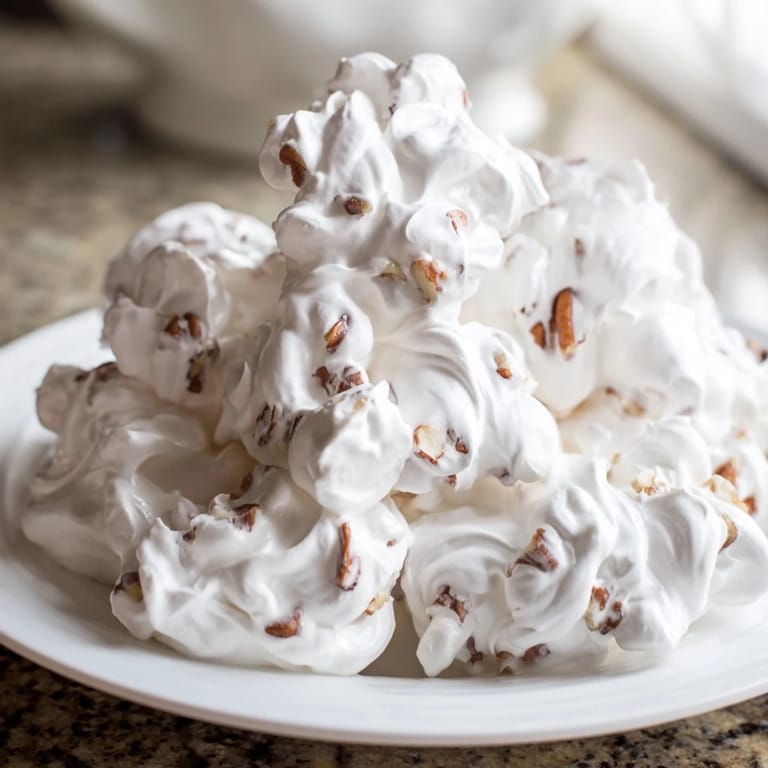
- Working as quickly as you can, drop tablespoonfuls of the mixture onto the prepared baking sheets—it firms up fast, so hesitation shows. If you have a piping bag, you can pipe quicker, but a spoon works just fine.
- Let it set completely:
- Leave the divinity at room temperature, undisturbed, for about 2 hours until the pieces are completely dry and set. Once dry, they'll keep in an airtight container for weeks, though they never last that long.
 Save to Pinterest
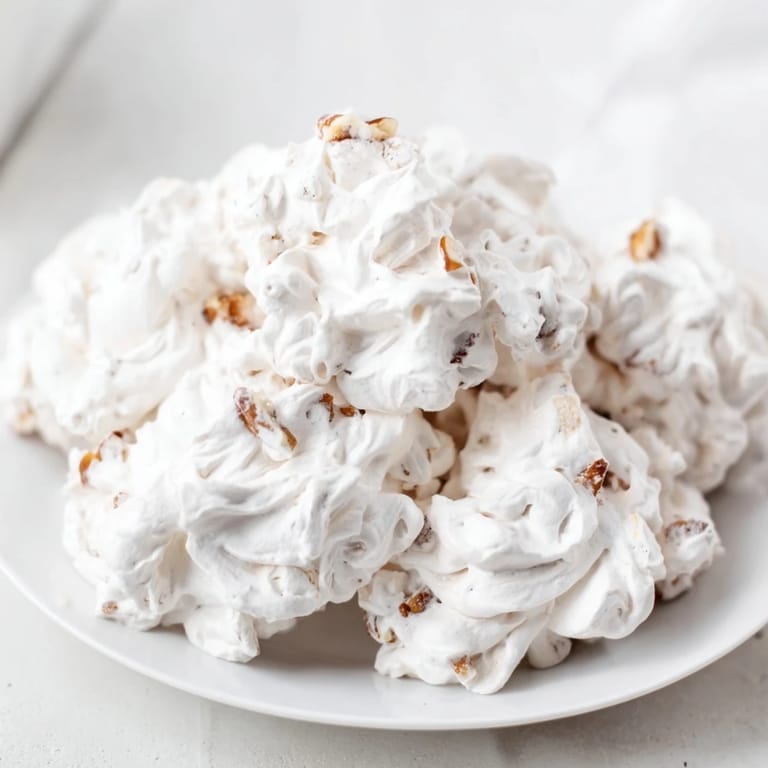
 There's something almost spiritual about the moment when you pour that bubbling syrup into the fluffy egg whites and watch it transform into glossy, cloud-like candy. My daughter watched me make it last year and asked if I was making "edible snow," which somehow perfectly describes the feeling of biting into a piece—it's delicate and ethereal in a way that feels like you're eating something that shouldn't technically be possible.
Why Humidity Matters So Much
I learned this the hard way on a humid summer afternoon, thinking surely the season didn't matter for candy. My beautifully whipped divinity never set; it stayed sticky and soft for days, collapsing into itself like it had given up. A friend who makes fudge for competitions explained that sugar is hygroscopic—it absorbs moisture from the air—which means humidity literally pulls moisture into your candy, preventing that crisp, dry finish. Now I check the weather forecast before even gathering ingredients; it's become a ritual, a small respect paid to the candy's needs.
The Temperature Technique
Hitting exactly 250°F is crucial because that's the temperature where sugar syrup reaches the firm ball stage—hot enough to set the candy, but not so hot it becomes brittle and grainy. When you drop a tiny bit of hot syrup into cold water, it should form a ball that holds its shape but still feels slightly soft to the touch; if it shatters like glass, you've gone too far. I used to watch candy thermometers like a hawk, checking every few seconds, which only made the cooking slower and the stress higher—now I check occasionally and trust the thermometer to do its job.
Nuts, Flavor Swaps, and Personal Touches
Pecans and walnuts are traditional, but I've made divinity with almonds, hazelnuts, and even toasted coconut flakes for variety. The key is using something with a little crunch and character so it plays against that silky-sweet candy texture. One year I added a pinch of almond extract alongside the vanilla, and it elevated the whole batch into something unexpectedly sophisticated.
- Toast your nuts lightly in a dry skillet before chopping—it deepens their flavor and makes the candy taste more intentional and professional.
- You can add a small pinch of cinnamon or nutmeg to the mixture after beating if you want subtle warmth without changing the color.
- For a festive look, top each piece with a pecan half or a sprinkle of colored sugar before the mixture sets, pressing gently so it sticks.
 Save to Pinterest
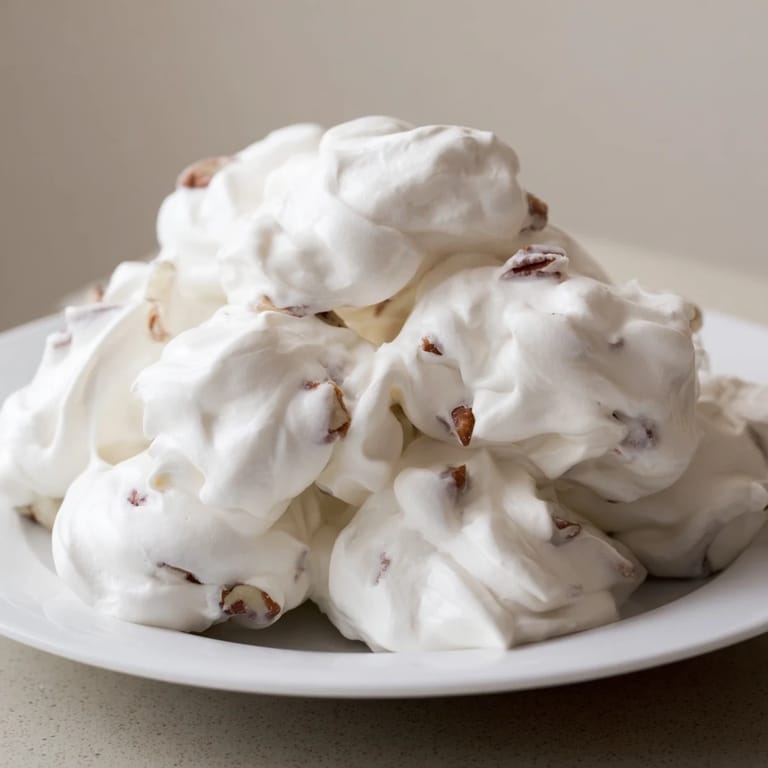
 Divinity is the kind of candy that feels like a small luxury, something you'd expect to pay too much for at a fancy shop but can make at home for the cost of a few eggs and sugar. It's become my go-to gift, the recipe people actually ask for, and honestly, it's a little bit of magic that never gets old.
Recipe FAQs
- → What gives divinity its light texture?
The light, airy texture comes from whipping hot sugar syrup into stiffly beaten egg whites, creating a fluffy candy base.
- → Can I use different nuts in divinity?
Yes, pecans and walnuts are traditional, but almonds or hazelnuts make good alternatives, adding their own crunch and flavor.
- → Why is controlling humidity important when making divinity?
High humidity can prevent divinity from setting properly, causing stickiness. A dry environment helps it dry to a firm, delicate consistency.
- → How do I know when the sugar syrup reaches the firm ball stage?
Using a candy thermometer, the syrup is ready at 250°F. At this temperature, a small drop in cold water forms a firm but pliable ball.
- → What is the best way to shape divinity before it sets?
Drop tablespoon-sized dollops quickly onto parchment-lined baking sheets before the mixture stiffens and then allow to dry at room temperature.