 Save to Pinterest
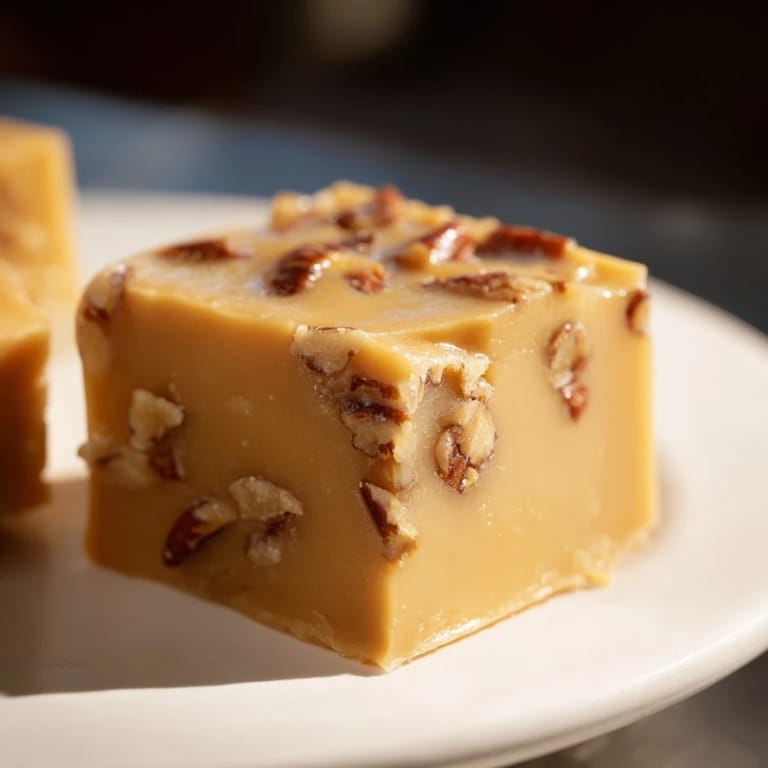
 My neighbor brought over a tin of penuche fudge one winter afternoon, and I remember standing in my kitchen, letting a piece dissolve on my tongue, completely mesmerized by how the brown sugar created this almost butterscotch-like depth I'd never found in regular chocolate fudge. That moment stuck with me, and I became determined to figure out how to make it myself. Turns out, the magic is in the precise temperature and the way you beat it until it transforms from glossy syrup into something that actually holds its shape. Once I nailed the technique, penuche became my go-to gift, the one people actually ask for by name.
I made a batch for my mom's book club a few years back, packed it in a vintage tin with a ribbon, and watched her face light up when she opened it at the gathering. One of her friends later told me she'd been rationing the pieces, eating just one after dinner each night to make it last. That's when I realized penuche fudge occupies this special space where it feels homemade and indulgent but never heavy or overwhelming.
Ingredients
- Light brown sugar: Use packed brown sugar, and don't skip it for regular white sugar—the molasses is where the whole character of this fudge lives.
- Granulated sugar: This brings structure and helps achieve the right texture when beaten.
- Whole milk: Whole milk creates a smoother, creamier fudge than lower-fat options.
- Unsalted butter: Cut it into cubes so it melts evenly and incorporates cleanly into the sugar mixture.
- Fine sea salt: Just a quarter teaspoon, but it's the whisper of salt that makes people ask what your secret ingredient is.
- Pure vanilla extract: Real vanilla matters here since it's one of only two flavorings in the final product.
- Pecans or walnuts: Toast them lightly first if you want their flavor to really sing, though many purists skip nuts entirely.
Tired of Takeout? 🥡
Get 10 meals you can make faster than delivery arrives. Seriously.
One email. No spam. Unsubscribe anytime.
Instructions
- Prepare your stage:
- Line your 8-inch square pan with parchment paper, letting it overhang the sides—this is your safety net for lifting the finished fudge out cleanly. A light butter underneath keeps everything from sticking.
- Combine and dissolve:
- In a heavy-bottomed saucepan, add your sugars, milk, butter, and salt. Medium heat is your friend here; you want the butter to melt gradually and the sugars to dissolve completely before anything comes to a boil, which usually takes about 5 minutes.
- Reach soft-ball stage:
- Once boiling, attach your candy thermometer and stop stirring entirely—your job now is to watch and wait. You're aiming for 238°F, the soft-ball stage, which should take 10 to 12 minutes. If you stir, you'll invite crystallization and ruin the smooth texture.
- Cool with patience:
- Pull it off the heat and let it sit completely undisturbed for 10 minutes. This cooling period is when the magic begins; the temperature drops just enough to make beating possible without the mixture being rock-hard.
- Beat until thick:
- Add your vanilla, then begin beating with a wooden spoon or electric mixer on low speed. You'll watch it go from glossy to matte, from pourable to thick and fudgy, in about 5 to 8 minutes—that moment when it starts to hold peaks is your signal you're done.
- Fold and pour:
- If using nuts, fold them in gently, then immediately pour into your prepared pan. You're racing the clock slightly here because once beaten, penuche sets fast.
- Set and cut:
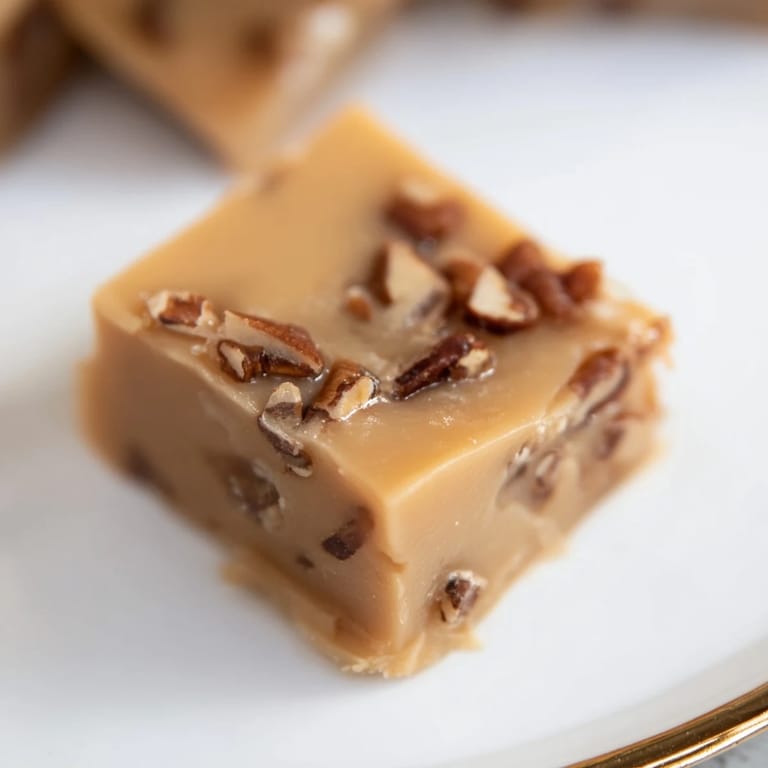
- Let it firm up at room temperature for at least an hour, then use the parchment overhang to lift the whole block out and cut into 1-inch squares with a sharp knife.
 Save to Pinterest
 There's a moment after beating when the mixture goes from liquid to solid, and it genuinely feels like alchemy—one more stir and suddenly it's thick enough to hold its shape. My daughter once asked if we could eat it straight from the pan, and honestly, that almost happened once when I got distracted by laundry.
Why Brown Sugar Changes Everything
Regular fudge uses chocolate to create depth, but penuche leans entirely on brown sugar's molasses content to build a flavor that's warm, almost woody, with hints of caramel and vanilla without any chocolate competing for attention. When I first made this, I was shocked at how the flavor actually deepens as it sits for a day or two, the brown sugar notes becoming more pronounced and rounded. It's a reminder that sometimes the simplest ingredients create the most interesting results when you respect their individual qualities.
The Beating Method That Matters
I've made penuche with both a wooden spoon and an electric mixer, and honestly, the mixer wins every time for consistency and ease. The wooden spoon approach feels more intentional and meditative, but after beating for 8 minutes straight, your arm will thank you for choosing the mixer. Either way, the moment you see the mixture go from glossy to matte is when you know to stop—beat past that point and it becomes too thick to spread, though you can always reheat it gently if needed.
Storage and Variations
Penuche keeps beautifully at room temperature, wrapped in wax paper and tucked into an airtight container, staying perfect for up to a week. I've also frozen batches successfully, and they thaw without any texture change, which is handy when you want to make gifts ahead of time. For flavor adventures, try stirring in a pinch of cinnamon or a tiny dash of maple extract before pouring into the pan, but sometimes the purest version—just brown sugar, butter, milk, and vanilla—is exactly what you need.
- Layer pieces between parchment in a tin to prevent sticking and create a gift-ready presentation.
- If the mixture becomes too thick to pour after beating, warm it gently over low heat for just 30 seconds.
- A sharp knife dipped in hot water makes cutting cleaner, neater squares.
 Save to Pinterest
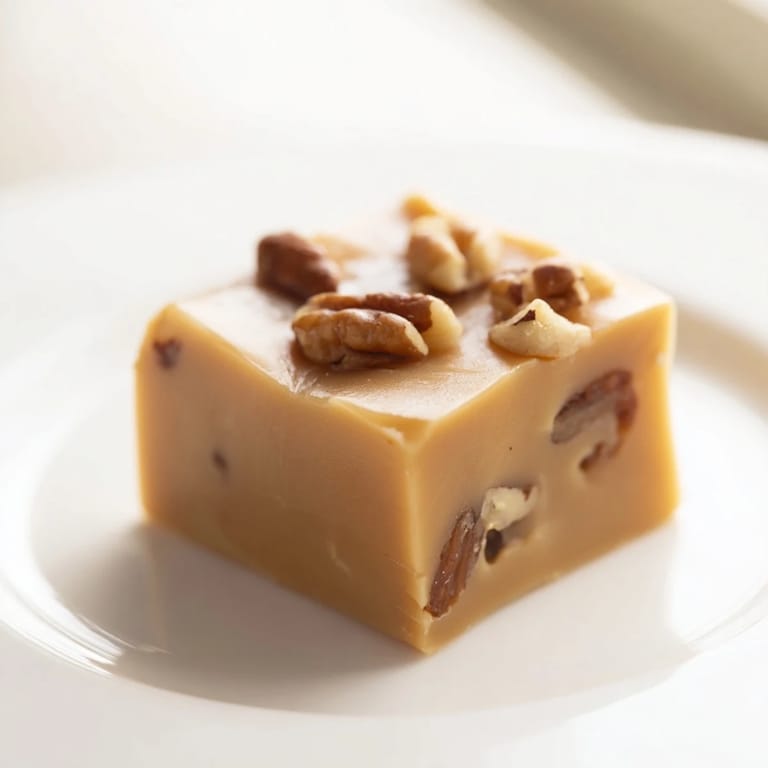
 There's something deeply satisfying about giving homemade fudge, knowing exactly what went into it and that it came from your hands. Penuche has a way of making people slow down and really taste it, which is probably the best compliment any sweet can receive.
Recipe FAQs
- → What gives penuche its caramel-like flavor?
The caramel flavor comes from cooking light brown sugar carefully until soft-ball stage, allowing the sugars to develop rich, buttery notes.
- → Can I make penuche without nuts?
Yes, omitting chopped pecans or walnuts results in a smooth, nut-free treat without compromising its creamy texture.
- → Why is a candy thermometer important here?
It helps reach the precise temperature (238°F/114°C) needed for the proper chewy texture, ensuring the sugar cooks to the right stage.
- → How long should penuche cool before cutting?
Let it set at room temperature for at least one hour to firm up, making it easier to cut into neat squares.
- → What variations enhance penuche flavor?
Adding cinnamon or a dash of maple extract can elevate the traditional taste with warm, complementary notes.
- → What texture should the mixture have when beating?
Beat the cooled mixture until it thickens, loses gloss, and starts to hold its shape, ensuring a smooth and creamy final texture.