 Save to Pinterest
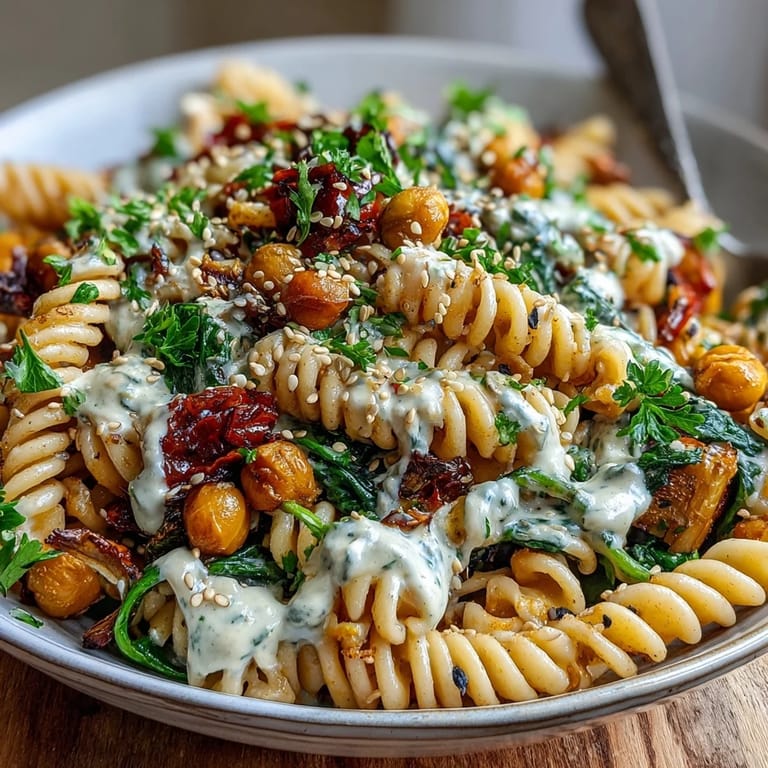
 There's something quietly satisfying about discovering that pasta doesn't have to come from wheat to feel substantial and real. A friend handed me a box of chickpea pasta one afternoon, skeptical herself, and I realized that evening how wrong my assumptions had been—the nutty depth, the way it holds sauce without dissolving into mush, the gentle hum of protein in every bite. This bowl came together on a Thursday when my kitchen felt too warm for heavy cream sauces, and tahini seemed like the obvious answer instead. What started as improvisation became something I make whenever I want to feel grounded and nourished without fuss.
I made this for my partner during one of those weeks where neither of us wanted to think too hard about dinner but we both craved something that felt intentional. The smell of roasting vegetables filled the kitchen, and somehow that simple act of waiting for things to caramelize felt like the most luxurious part of the meal. He asked for the recipe before finishing the bowl, which tells you everything you need to know about how this one lands.
Ingredients
- Chickpea pasta: This is the anchor—it's got nearly double the protein of regular pasta and a slightly earthy taste that loves bold flavors, so don't shy away from it.
- Zucchini: When roasted properly, it becomes almost tender enough to melt, so don't skip the halfway stir.
- Red bell pepper: The sweetness balances the earthiness of tahini beautifully; use whatever color calls to you, though red has the most natural sugar.
- Red onion: Stays crisp enough to add texture even after roasting, and its slight sharpness is exactly what tahini needs.
- Cherry tomatoes: These burst slightly under heat and release their juice into the dish, creating small pockets of brightness.
- Olive oil: Don't skimp here—it's what gets those vegetables from soggy to golden.
- Dried oregano and smoked paprika: Together they create a warm, Mediterranean foundation that makes the whole bowl taste like it traveled somewhere.
- Tahini: This is the soul of the sauce—buy good quality if you can, because the flavor difference is real and worth it.
- Lemon juice: Cuts through tahini's richness and keeps everything from feeling heavy; fresh lemon makes an actual difference.
- Maple syrup or agave: Just a touch of sweetness to round out the tahini and balance the acid from lemon.
- Warm water: The secret to a tahini sauce that pours instead of clumps—add it gradually and taste as you go.
- Fresh parsley: The garnish that makes people think you spent more time than you actually did; it brightens everything.
- Toasted sesame seeds: Optional but they add a nutty crunch that makes the whole texture story more interesting.
Tired of Takeout? 🥡
Get 10 meals you can make faster than delivery arrives. Seriously.
One email. No spam. Unsubscribe anytime.
Instructions
- Heat your oven and prep:
- Get that oven to 220°C (425°F) and line a baking sheet with parchment paper—this saves cleanup and prevents sticking. The heat needs time to build, so don't skip this step.
- Season the vegetables:
- Toss your zucchini, bell pepper, red onion, and cherry tomatoes with olive oil, oregano, smoked paprika, salt, and pepper in a large bowl, making sure every piece gets coated. Spread them out on the baking sheet in a single layer—crowding them steams instead of roasts, which defeats the whole purpose.
- Roast until caramelized:
- Let them go for 20 to 25 minutes, stirring halfway through so nothing burns on the bottom. You're looking for the edges to turn golden and maybe slightly charred, which is when the magic happens.
- Cook the pasta:
- While vegetables roast, boil water for your chickpea pasta and cook it according to package directions—chickpea pasta cooks faster than wheat pasta usually does, so keep an eye on it. Drain it but don't rinse it; the starch helps the sauce cling better.
- Build the tahini sauce:
- In a small bowl, whisk together tahini, lemon juice, maple syrup, warm water, minced garlic, and a pinch of salt until it's smooth and creamy. If it seems too thick, add water one tablespoon at a time while whisking—this is where patience matters because you can't un-thin it.
- Bring it all together:
- Combine your warm pasta and roasted vegetables in a large bowl, then drizzle the tahini sauce over everything and toss gently until every strand is coated. If it feels dry, add a splash more water—this sauce should flow, not cling.
- Plate and finish:
- Divide between bowls and scatter fresh parsley and sesame seeds on top while it's warm. It's equally good warm or at room temperature, so eat it whenever you're ready.
 Save to Pinterest
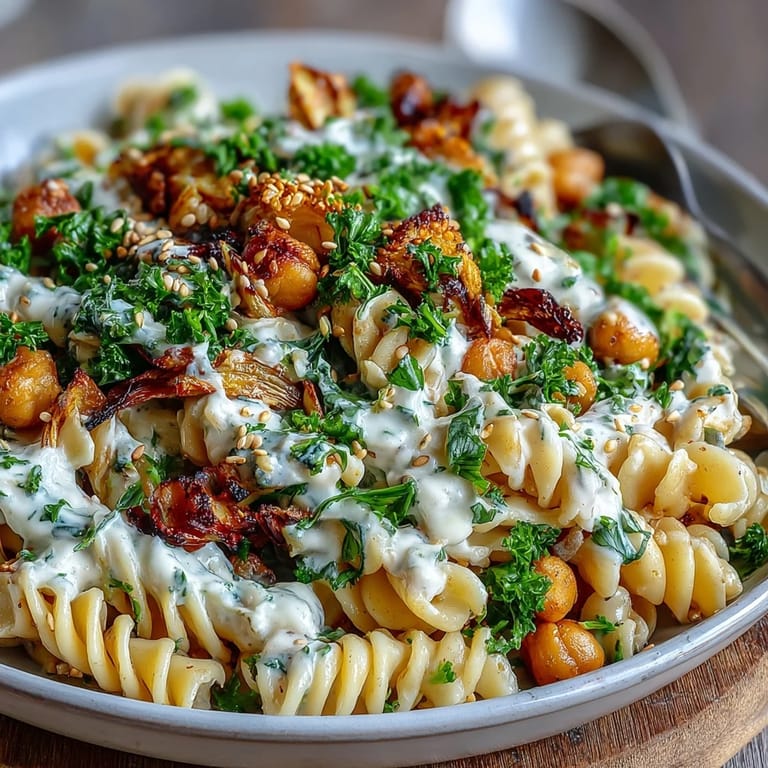
 There was a moment during a rushed weeknight when I plated this and actually sat down to eat instead of standing over the sink, and that's when I understood this recipe was doing something right. Food that nourishes you without demanding your whole evening feels like its own kind of gift.
Why Chickpea Pasta Changes Everything
Regular pasta made me feel satisfied for about thirty minutes, then hungry again. Chickpea pasta sits differently in your stomach—there's real fiber and protein happening, not just refined carbohydrates. Once you taste the difference, it's hard to go back, and I stopped thinking of it as a substitution and started thinking of it as its own thing entirely, with its own nutty flavor that actually wants a bold sauce rather than hiding under one.
The Tahini Sauce Secret
I spent months making tahini sauce too thick until someone told me it should be the consistency of heavy cream before you toss it with pasta. Now I whisk it in the bowl first, taste it, and adjust before anything gets combined. The lemon juice is doing twice the work—it's cutting richness and adding brightness, so don't reduce it thinking you're helping the balance.
Making This Meal Your Own
The vegetables here are a starting point, not a rule. I've roasted broccoli, eggplant, carrots, and squash in this same way, and they all sing with tahini. The sauce is versatile enough to hold up whatever you choose, as long as you roast it properly and don't steam it by mistake. The one thing I always keep is the lemon and garlic in the tahini—that's the backbone everything else rests on.
- Add chickpeas or grilled tofu if you want even more protein to make this completely filling on its own.
- In warmer months, try adding fresh herbs like mint or cilantro instead of just parsley.
- This keeps well in the fridge for three days, and the flavors actually deepen as it sits.
 Save to Pinterest
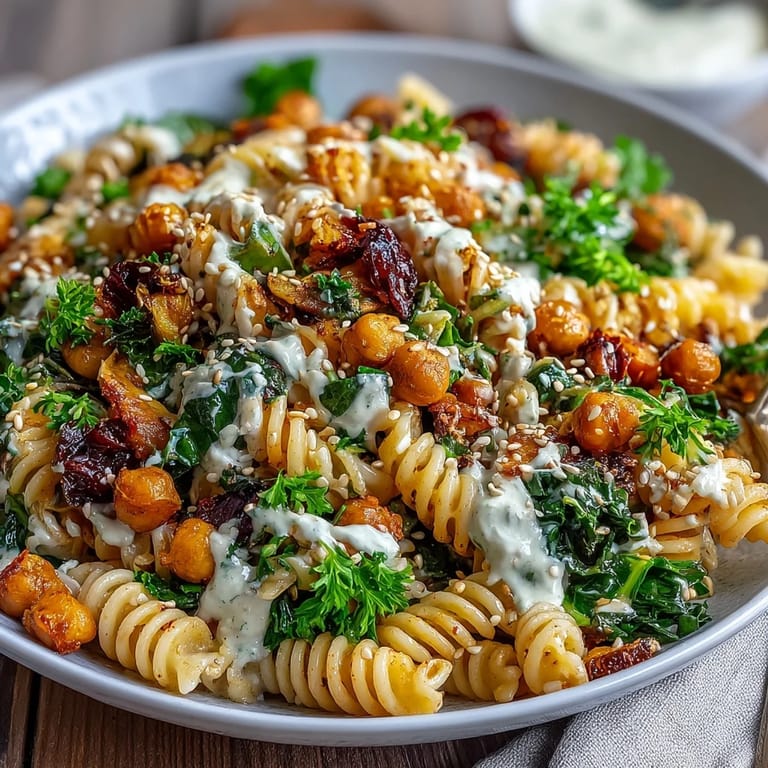
 This bowl feels like it takes care of you, which is the kind of food worth keeping in your regular rotation. It's good enough to cook on purpose and simple enough that you actually will.
Recipe FAQs
- → What makes chickpea pasta different from regular pasta?
Chickpea pasta is made from chickpea flour instead of wheat, providing significantly more protein and fiber per serving. It has a slightly nuttier flavor and firmer texture that holds up well with roasted vegetables and creamy sauces.
- → Can I make this gluten-free?
Yes, chickpea pasta is naturally gluten-free. However, always check the package label to ensure the brand you choose is certified gluten-free, as some facilities process wheat products.
- → How long does the tahini sauce last?
The tahini sauce keeps well in an airtight container in the refrigerator for up to one week. You may need to add a splash of water and whisk again before using, as it tends to thicken when chilled.
- → What vegetables work best for roasting?
Zucchini, bell peppers, red onion, and cherry tomatoes are ideal because they roast evenly and develop sweet, caramelized flavors. You can also add eggplant, broccoli, cauliflower, or carrots depending on the season.
- → Can I add more protein to this bowl?
Absolutely. Consider adding cooked chickpeas, grilled tofu cubes, or even baked tempeh for extra plant-based protein. Shredded chicken or roasted chickpeas also work beautifully if you're not strictly vegetarian.
- → Is this suitable for meal prep?
This bowl is excellent for meal prep. Store the roasted vegetables, pasta, and sauce separately in airtight containers for up to four days. Reheat the vegetables and pasta gently, then toss with fresh sauce before serving.