 Save to Pinterest
 My kitchen smells like a gingerbread factory in December, and it's because I finally cracked the code on these cookies—soft centers that give way to the gentlest crunch, not the brick-hard versions I made for years. There's something about the molasses and all those warm spices hitting together that makes people stop mid-conversation and ask what you're baking. This recipe became my go-to after a friend mentioned her grandmother always made them slightly chewy, and I realized I'd been overbaking by a paranoid minute or two.
I brought three dozen of these to a cookie swap last year, convinced they wouldn't stand out against all the fancy varieties, and somehow they disappeared first—someone actually asked for the recipe written down because they wanted to make them for their kids. That moment shifted how I thought about this recipe, from something I made out of tradition to something that actually connected with people.
Ingredients
- All-purpose flour (3 cups): The foundation that gives structure without being heavy; measure by spooning and leveling, not scooping, unless you like dense cookies.
- Baking soda and baking powder (3/4 teaspoon and 1/2 teaspoon): Together they create that subtle lift and tender crumb, with the soda also helping the molasses flavor bloom.
- Ground ginger, cinnamon, cloves, and nutmeg (1 tablespoon ginger, 2 teaspoons cinnamon, 1/2 teaspoon each of cloves and nutmeg): These four are the whole personality of the cookie; buy them fresh if you can, and don't skip the cloves even though you think you might.
- Salt (1/2 teaspoon): Balances all that sweetness and makes the spices sing instead of flatten.
- Unsalted butter and dark brown sugar (3/4 cup each): Butter brings richness while brown sugar adds moisture and depth that white sugar never could.
- Egg and unsulphured molasses (1 large egg and 1/2 cup): The egg binds everything while molasses gives that signature deep color and tangy-sweet flavor that defines a real gingerbread cookie.
- Vanilla extract (1 teaspoon): A quiet player that rounds out the spice profile and prevents the cookies from tasting one-dimensional.
- Granulated sugar for rolling (1/4 cup, optional): Creates a subtle sparkly crust if you're after that, but honestly these cookies need nothing else.
Tired of Takeout? 🥡
Get 10 meals you can make faster than delivery arrives. Seriously.
One email. No spam. Unsubscribe anytime.
Instructions
- Mix the dry team:
- Whisk together your flour, baking soda, baking powder, ginger, cinnamon, cloves, nutmeg, and salt in a medium bowl until everything is evenly distributed. You'll notice the mixture smell amazing already, which is your sign you're doing this right.
- Cream butter and brown sugar:
- Beat them together for about two minutes until the mixture is light, fluffy, and noticeably lighter in color. This step matters more than you'd think—it incorporates air that makes cookies tender instead of dense.
- Bring the wet ingredients in:
- Add the egg, molasses, and vanilla to your butter mixture and beat until everything is well combined and glossy. The molasses will feel thick, but trust that it's supposed to.
- Marry wet and dry:
- Gradually add your dry mixture to the wet mixture, stirring just until the flour disappears. Stop as soon as you don't see white streaks—overmixing at this point will make your cookies tough.
- Chill the dough:
- Divide the dough into two discs, wrap them tightly in plastic wrap, and refrigerate for at least an hour. The dough will firm up and the flavors will actually develop and deepen, which is why patience here pays off.
- Roll and cut:
- On a lightly floured surface, roll one disc to about 1/4-inch thickness and cut into whatever shapes make you happy. The dough should be cool enough to handle cleanly but not so cold it cracks.
- Bake with intention:
- Arrange cookies an inch apart on parchment-lined baking sheets, sprinkle with granulated sugar if using, and bake at 350°F for 8 to 10 minutes until the edges are just firm but the centers still feel slightly soft. They'll continue cooking on the pan for a minute before you transfer them to a wire rack.
- Cool completely before decorating:
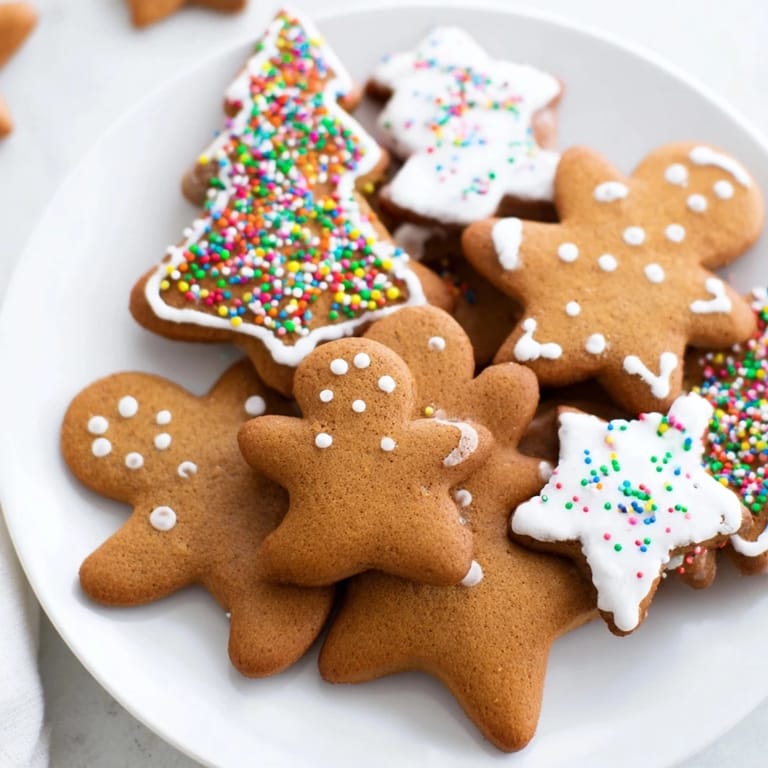
- Let cookies sit on the baking sheet for two minutes, then move them to a wire rack where they'll finish setting as they cool completely. Only then should you add royal icing or glaze, so it doesn't melt.
 Save to Pinterest
 There's a moment every December where someone in my life mentions they're stressed about holiday baking, and I always offer to make a batch of these—not because they're difficult, but because sharing homemade gingerbread cookies feels like saying I care about making your holidays a little warmer. Every time someone bites into one and their expression softens, I remember why I keep coming back to this recipe.
The Molasses Factor
Molasses is the secret ingredient that separates these from any basic spice cookie you'd make by accident. The unsulphured variety has a cleaner, sweeter flavor that lets the spices shine without adding any sharp bitterness, and it also contributes moisture and chewiness that keeps these cookies from drying out even after a few days. If you've only ever used blackstrap molasses for cooking savory dishes, this is your chance to taste the difference—it's honestly worth keeping a jar specifically for baking.
Storage and Make-Ahead Magic
The best part about this recipe is that you can make the dough up to three days ahead and refrigerate it, or freeze it for up to two months, which means you can have fresh-baked gingerbread cookies ready whenever the mood strikes. I actually prefer making the dough a day ahead because the spices continue to develop and marry together, creating a more complex flavor. Just let the dough come to cool room temperature for a few minutes before rolling if you've frozen it, so it's pliable but still cold enough to cut clean shapes.
Decorating and Serving
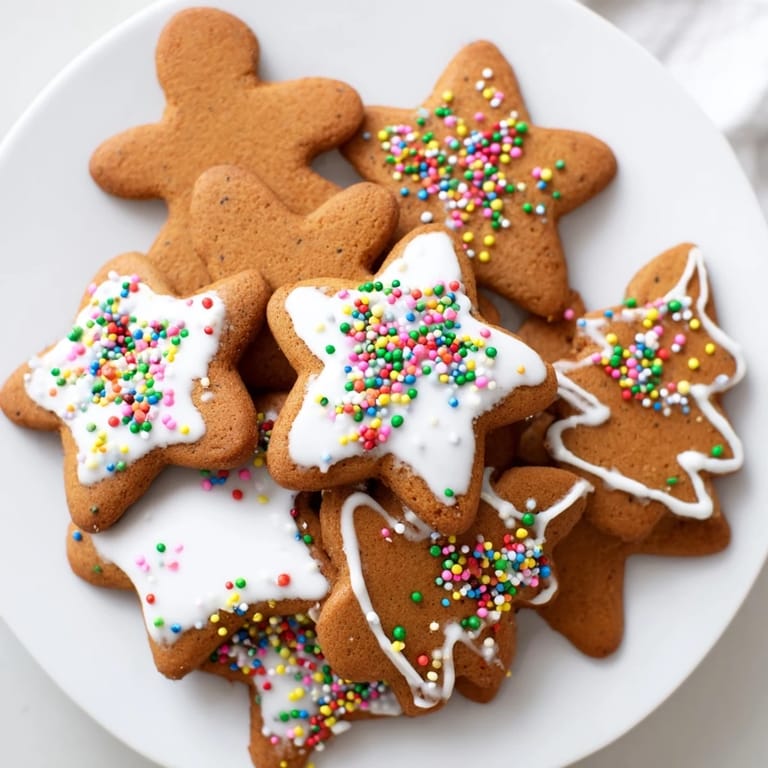
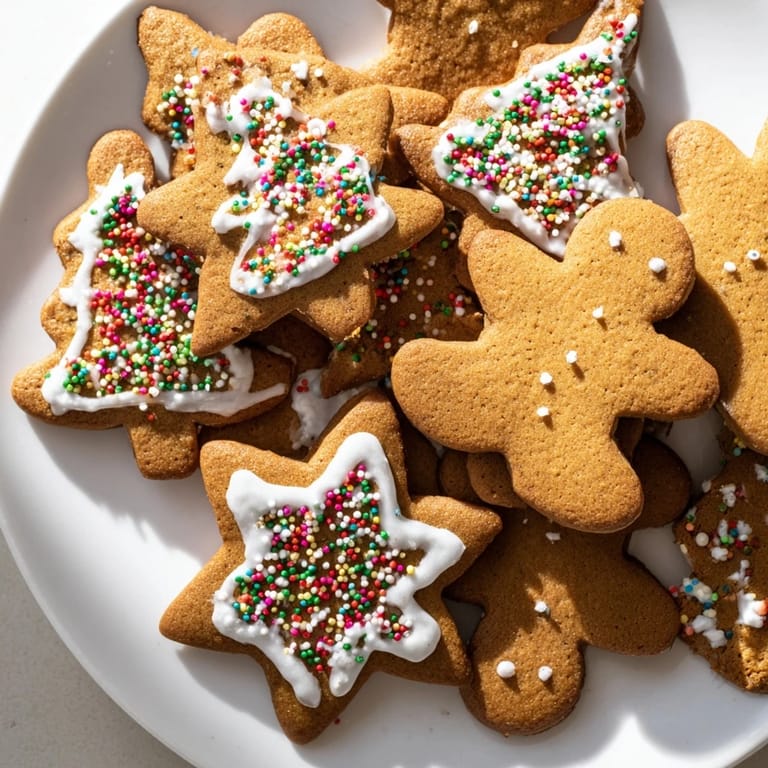
Royal icing is the traditional choice for decorating these cookies, and you can tint it any color you want—white, red, green, or go wild with pastels if you're feeling fancy. A simpler glaze made from powdered sugar and milk works beautifully too, and feels less intimidating if you're not confident with royal icing. The cookies themselves are honestly beautiful without any decoration at all, especially if you rolled them in granulated sugar before baking, but there's something joyful about taking a few extra minutes to make them look festive.
- Pair these with hot chocolate, spiced cider, or coffee for the ultimate cozy moment.
- Wrap them in parchment and tie with twine if you're giving them as gifts—they last for about a week in an airtight container.
- Kids love decorating these with icing and sprinkles, which turns cookie-making into an actual activity rather than just baking.
 Save to Pinterest
 These gingerbread cookies have become my quiet tradition, the thing I make when I want my kitchen to smell like December or when I need to remind someone that homemade is always worth the effort. They're simple enough that you won't stress, but special enough that people will remember them.
Recipe FAQs
- → What spices are used to flavor these cookies?
A blend of ground ginger, cinnamon, cloves, nutmeg, and a pinch of salt provide the warm, classic spice flavor.
- → How does molasses affect the cookies?
Molasses adds rich color, deep flavor, and moisture, contributing to the soft and tender texture.
- → Why is chilling the dough important?
Chilling firms the dough for easier rolling and cutting while allowing flavors to develop fully.
- → What is the ideal baking time for texture variation?
Bake 8-10 minutes: shorter for softer cookies, longer for a gentle crunch around edges.
- → Can these cookies be decorated?
Yes, use royal icing or simple glaze with sprinkles to add festive decoration once cooled.
- → Are substitutions possible for dietary preferences?
Yes, gluten-free flour blends and plant-based butters can be used to accommodate dietary needs.