 Save to Pinterest
 There's something about the smell of butter and toasted pecans hitting your kitchen at three in the afternoon that stops time completely. I discovered these cookies on a rainy Tuesday when I was trying to use up pecans from my pantry and had this random craving for something both decadent and homey. The caramel swirl came from wanting to make something feel special without overcomplicating things, and honestly, the first batch disappeared before anyone else even knew I was baking.
I made these for my neighbor's housewarming last spring, and watching people's faces light up when they bit into one felt like the best compliment I could get. She actually called me the next week asking if I could make them again for her book club, which is basically code for "these are addictive and everyone loved them." It's funny how a simple cookie can become the thing people remember about your cooking.
Ingredients
- Unsalted butter, softened: The foundation of everything rich and tender here—make sure it's actually soft or your dough will be tough and your life slightly harder.
- Light brown sugar and granulated sugar: This combo gives you moisture from the brown sugar and structure from the white, creating the perfect texture balance.
- Eggs: Room temperature eggs mix in more smoothly and help everything come together without looking curdled or weird.
- Pure vanilla extract: Don't cheap out on this one; it's the whisper of flavor that makes people say "there's something amazing in these."
- All-purpose flour: Measure by weight if you can, or spoon and level if you're doing cups—packed flour ruins everything.
- Baking soda and salt: These aren't just background players; they help the cookies spread right and taste like the best version of themselves.
- Pecan halves, toasted: Toasting them yourself is non-negotiable—it wakes up the flavor in a way that changes the whole cookie game.
- Caramel sauce: Room temperature is key so it swirls prettily into the dough instead of staying in stubborn little blobs.
Tired of Takeout? 🥡
Get 10 meals you can make faster than delivery arrives. Seriously.
One email. No spam. Unsubscribe anytime.
Instructions
- Get your oven ready and prep the pecans:
- Preheat to 350°F and line two baking sheets with parchment. Spread those pecans out on another sheet and let them toast for about six to eight minutes until the smell is absolutely intoxicating—that's when you know they're ready. They'll continue cooking a bit after you pull them out, so don't wait until they're dark brown.
- Make the creamed base:
- Dump your softened butter and both sugars into a large bowl and cream them together with an electric mixer for two to three minutes—you want it light, fluffy, and noticeably paler than when you started. This step is worth the full time because it actually does change the texture of your finished cookies.
- Add eggs and vanilla smoothly:
- Crack your eggs in one at a time, mixing well after each addition, then pour in the vanilla and keep mixing until everything looks completely smooth and homogeneous. This takes about a minute and prevents you from getting little pockets of egg white in your dough.
- Combine dry ingredients separately:
- In another bowl, whisk together your flour, baking soda, and salt to break up any lumps and distribute the leavening evenly. This small step prevents you from getting pockets of baking soda taste in some bites.
- Bring wet and dry together:
- Gradually add your dry mix to the butter mixture, stirring just until you don't see flour streaks anymore—overmixing makes tough cookies and nobody wants that. Then fold in those gorgeous toasted pecans.
- Portion and swirl:
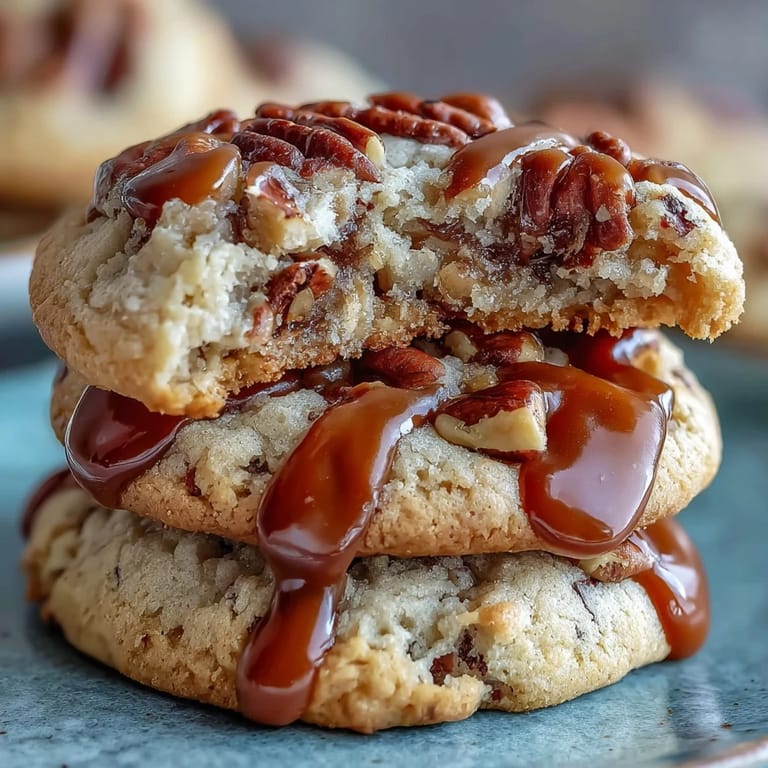
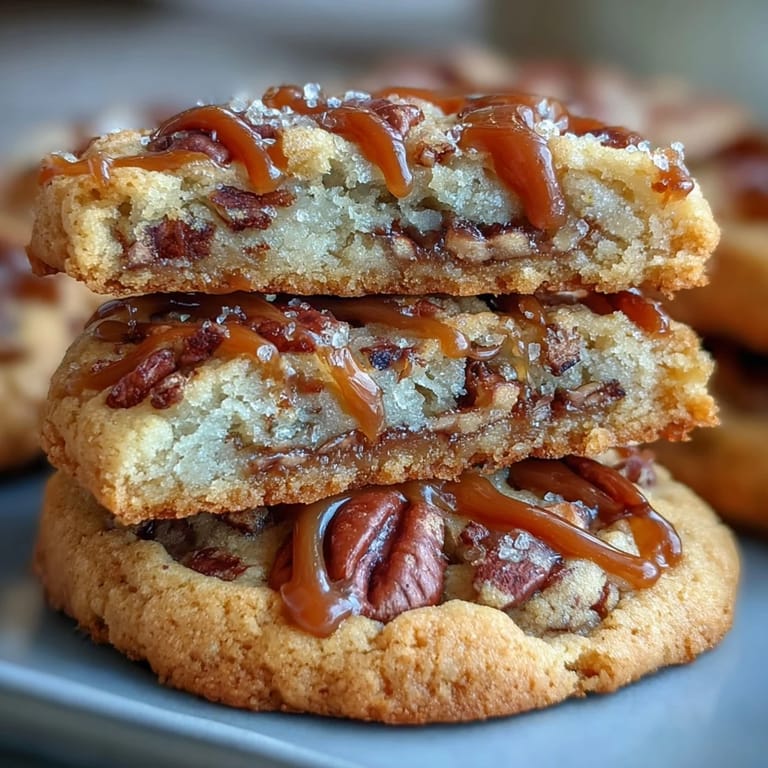
- Drop rounded tablespoons of dough onto your prepared sheets with about two inches between each one, then put a small spoonful of caramel on top of each mound. Use a toothpick to create gentle swirls, being careful not to go too wild or you'll lose that pretty marbled effect.
- Bake until golden:
- Pop them in the oven for eleven to thirteen minutes, watching until the edges are golden brown but the centers still look slightly underbaked—they'll firm up as they cool. This is the secret to getting that tender, almost buttery center.
- Cool with patience:
- Leave them on the baking sheets for five full minutes before transferring to a wire rack, which keeps them from falling apart but lets them finish cooking. Complete cooling takes about twenty minutes, and yes, waiting is worth it.
 Save to Pinterest
 There's a moment when you pull these cookies from the oven and the aroma fills your entire house that you remember why you bake in the first place. It's not really about feeding people, though they love it—it's about creating something warm that says "I thought about making your day better."
The Toasted Pecan Difference
Here's something I learned the hard way: raw pecans taste fine, but toasted pecans taste like somebody actually cared. When you toast them yourself right before mixing, the oils wake up and create this nutty, almost caramelized undertone that store-bought toasted pecans sometimes miss. I used to skip this step when I was in a hurry, and honestly, the cookies were still good but they felt a little flat, like they were missing their own personality. Now I treat the toasting like a non-negotiable part of the recipe, and people taste the difference immediately.
Making Your Own Caramel
If you want to go the homemade route, it's genuinely easier than it sounds, and the flavor is richer than most store-bought versions. Melt half a cup of sugar in a saucepan over medium heat, stirring occasionally, until it's amber colored and smells like burnt sugar in the best possible way. Remove it from heat, quickly stir in two tablespoons of butter and a quarter cup of heavy cream, and let it cool to room temperature before swirling it into your cookie dough. The caramel will thicken slightly as it cools, which is exactly what you want for swirling—too warm and it just soaks into the dough, too cold and it won't blend at all.
Storage and Keeping Them Fresh
These cookies live happily in an airtight container for up to five days, though honestly they rarely last that long around here. I've found that keeping them in a container with a piece of bread keeps them from getting hard, which sounds weird but actually works because the cookies pull moisture from the bread. You can also freeze the baked cookies for up to two months if you want to portion them out and have fresh treats whenever you need a quick win.
- Pack them in layers with parchment between to prevent them from sticking together in the container.
- Let them cool completely before storing or they'll get sweaty and lose that lovely crispy-chewy texture.
- If they do harden up, a quick five seconds in the microwave brings them back to life perfectly.
 Save to Pinterest
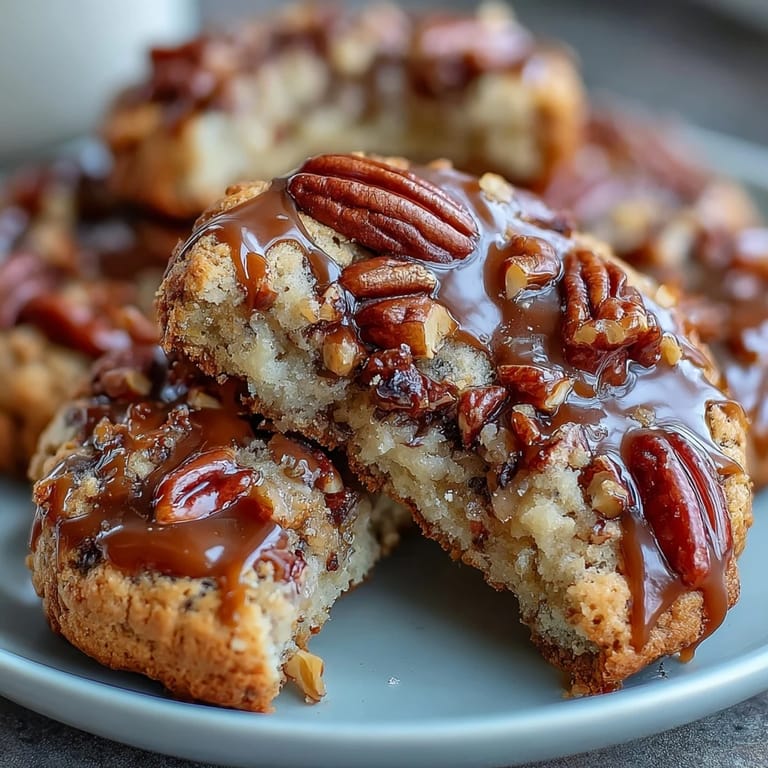
 These butter pecan cookies with caramel swirl are the kind of recipe that becomes a permanent part of your rotation because they're simple enough to make on any random Tuesday but special enough to feel like you're giving someone a real gift. Every time you make them, they get better because you learn a little more about your own oven and your own hands.
Recipe FAQs
- → How do I toast pecans for better flavor?
Spread pecan halves on a baking sheet and toast in a preheated oven at 350°F (175°C) for 6–8 minutes until fragrant, then let cool before use.
- → Can I use homemade caramel sauce for the swirl?
Yes, homemade caramel can be made by melting sugar, then adding butter and cream until smooth. Allow it to cool to room temperature before swirling into dough.
- → What is the best way to create the caramel swirl?
Drizzle caramel sauce over cookie dough mounds and gently swirl using a toothpick or knife tip, creating a marbled effect without mixing fully.
- → How should I store these cookies to maintain freshness?
Store cooled cookies in an airtight container at room temperature for up to five days to keep them soft and flavorful.
- → Are there any tips for achieving the perfect cookie texture?
Cream butter and sugars well for a fluffy dough, avoid over-mixing flour, and bake cookies until edges turn golden while centers remain just set.